
Trending articles

Before Booking Your Next Trip, Compare These 7 Travel Cards
Compare these travel cards before booking your upcoming trip. Here are some lesser-known insights related to the travel cards. Top 7 Travel Card Profiles to Evaluate Comparing travel credit cards before paying for flights, hotels, or rental cars ensures you maximize reward multipliers and lock in essential travel protections: 1. Premium Luxury Travel Cards (e.g., Capital One Venture X® / Chase Sapphire Reserve®): Delivers substantial annual travel statement credits, airport lounge access networks, and primary auto rental collision coverage. 2. Flexible Point Transfer Cards (e.g., Chase Sapphire Preferred®): Earns high-reward multipliers on travel bookings and dining, with the ability to transfer points 1:1 to major airline and hotel partner programs. 3. Flat-Rate Miles Cards (e.g., Capital One Venture Rewards): Offers an unlimited 2x miles on all everyday purchases, allowing travelers to offset any travel purchase without managing complex categories. 4. No-Annual-Fee Travel Cards (e.g., Bank of America® Travel Rewards): Provides zero foreign transaction fees and baseline rewards on everyday spend without paying an annual recurring fee. 5. Airline Co-Branded Cards (e.g., Delta SkyMiles® / United™ Explorer): Unlocks carrier-specific perks such as free checked bags, priority boarding privileges, and in-flight purchase discounts. 6. Hotel Loyalty Cards (e.g., Marriott Bonvoy Boundless® / Hilton Honors Cards): Generates automatic elite status, free night awards, and room upgrade privileges at participating hotel chains. 7. Dining & Travel Multiplier Hybrids (e.g., American Express® Gold Card): Yields high points on dining and grocery purchases alongside travel bookings, converting daily spending into future flight redemptions. Crucial Travel Perks to Compare Before Paying Evaluating specific contract protections prevents unexpected out-of-pocket costs during travel disruptions: Foreign Transaction Fees: Confirm the card charges 0% in foreign transaction surcharges to avoid paying an extra 3% fee on foreign purchases. Trip Cancellation and Interruption Insurance: Check whether the card reimburses non-refundable passenger tickets if illness, severe weather, or emergencies disrupt your trip. Primary vs. Secondary Auto Rental Collision Coverage: Primary coverage pays for rental vehicle damage directly without requiring you to file a claim through your personal auto insurance policy first. Travel Card Feature Comparison Matrix Travel Card Category Primary Protection / Perk Foreign Fee Best Travel Scenario Premium Luxury Travel Primary rental insurance & Lounge access 0% Frequent flyers needing airport comfort & full travel insurance Flexible Point Multiplier 1:1 Airline & Hotel point transfers 0% Travelers seeking maximum redemption value across multiple brands Flat-Rate Miles Straightforward statement credit redemptions 0% Simple spending across varied travel and lodging providers Airline Co-Branded Free checked bags & priority boarding 0% Brand-loyal travelers who fly frequently with a single carrier Booking Tip: Pay for your entire travel reservation on a card that offers primary rental car insurance and trip delay protection to avoid buying costly add-on coverage at rental counters. Common FAQs 1. Why should you use a credit card with no foreign transaction fees when traveling abroad? Cards with no foreign transaction fees prevent banks from adding a 3% surcharge on every international purchase, saving you $30 for every $1,000 spent overseas. 2. What is the difference between primary and secondary rental car insurance on credit cards? Primary coverage pays for damage or theft to a rental car directly without involving your personal car insurance, whereas secondary coverage only pays for costs remaining after your personal policy pays out. 3. Is a flexible point travel card better than an airline-specific card? Flexible point cards are generally better for varied travel because points can transfer to multiple airlines and hotels, while airline-specific cards are best for brand-loyal flyers seeking checked bag fee waivers. Key Takeaways Review Protection Coverage: Pick cards offering trip delay, cancellation, and primary rental car insurance before booking. Eliminate Foreign Fees: Verify that your chosen travel card charges 0% on foreign purchases before traveling abroad. Match Transfer Partners: Choose flexible point cards that partner directly with your preferred airlines and hotel chains. Offset Annual Fees: Ensure annual travel statement credits and perks comfortably exceed any card annual fees.

Looking for a Huge Travel Bonus? Start With These 7 Credit Cards
Credit cards are delivering massive travel welcome bonuses as well as long-term discounts. Here are some lesser-known insights regarding these travel cards. Top 7 Credit Card Profiles for Massive Travel Bonuses Selecting the right travel credit card allows you to turn minimum spending requirements into major welcome bonuses redeemable for flights, hotel stays, and flexible point transfers: 1. Flexible Transferable Points Flagships (e.g., Chase Sapphire Preferred® / Sapphire Reserve®): Offers high-value welcome bonuses in transferable points that convert 1:1 to major airline and hotel loyalty partners or redeem for elevated value through travel portals. 2. Premium Luxury Travel Cards (e.g., Capital One Venture X® / The Platinum Card® from American Express): Combines substantial introductory point bonuses with premium airport lounge access, annual travel credits, and global entry reimbursement. 3. Flat-Rate Miles Cards (e.g., Capital One Venture Rewards): Delivers a straightforward welcome bonus along with an unlimited 2x miles per dollar on all everyday purchases, simplifying rewards tracking. 4. Everyday Dining & Grocery Travel Multipliers (e.g., American Express® Gold Card): Yields large introductory points while earning accelerated rewards on everyday dining out and U.S. supermarket purchases. 5. Mid-Tier Flexible Rewards Cards (e.g., Citi Strata Premier℠): Generates strong bonus point value on travel, gas stations, supermarkets, and restaurants for an accessible annual fee. 6. Hotel Co-Branded Loyalty Cards (e.g., Marriott Bonvoy Boundless® / Hilton Honors Cards): Unlocks multiple free night awards or six-figure hotel point bonuses alongside complimentary elite status tiers. 7. Airline Co-Branded Cards (e.g., Delta SkyMiles® / United™ Explorer Card): Provide bonus frequent flyer miles, free checked bags, priority boarding, and companion certificates for loyal airline passengers. How to Safely Earn Travel Welcome Bonuses To unlock lucrative welcome offers without incurring unnecessary debt or interest charges: Track Minimum Spend Windows: Note the exact timeline (typically 3 to 6 months from account opening) required to reach the minimum purchase threshold. Shift Routine Expenses: Pay existing monthly bills (groceries, utilities, insurance) on the new card rather than manufacturing unnecessary extra spending. Pay Balances in Full: Clear your statement balance each month to ensure interest charges do not erode the value of your earned bonus points. Travel Bonus Comparison Matrix Card Profile / Type Minimum Spend Timeline Primary Bonus Type Ideal Traveler Match Flexible Transfer Point Card $4,000 in 3 Months Transferable points (Airlines/Hotels) Travelers seeking maximum flight flexibility Premium Luxury Travel Card $4,000 to $6,000 in 3–6 Months High-tier flexible points + Lounge pass Frequent flyers wanting VIP airport perks Flat-Rate Miles Card $3,000 in 3 Months Flat-rate miles redeemable for travel Simple spenders wanting easy redemptions Hotel Loyalty Co-Branded $3,000 in 3 Months Free night certificates / Hotel points Brand-loyal guests staying at major chains Travel Bonus Tip: Always confirm account approval dates with customer support, as your 90-day minimum spend timer begins on the day you are approved—not the day your physical card arrives. Common FAQs 1. What is the average minimum spending requirement to earn a travel card bonus? Most mid-tier travel credit cards require cardholders to spend between $3,000 and $4,000 within the first 3 months of account opening to unlock the full welcome bonus. 2. Can you earn a travel welcome bonus on the same card more than once? It depends on the card issuer. Many banks enforce rules (such as Chase's 24/48-month rules or Amex's once-per-lifetime policy) that restrict how often you can earn a bonus on the same product line. 3. Do travel bonus points expire if you do not use them right away? Flexible travel points earned through major bank rewards programs do not expire as long as your credit card account remains active and in good standing. Key Takeaways Match Bonuses to Habits: Select card types whose point structures align with your preferred airlines or hotel chains. Plan Spending Budgets: Ensure you can comfortably hit minimum spend requirements through existing daily expenses. Leverage Point Transfers: Transfer points directly to airline partners to unlock maximum redemption value for flight bookings. Avoid Interest Costs: Pay off monthly balances in full to preserve the full net value of your travel rewards.
0% APR Credit Cards Through 2028: How to Apply and Qualify
How to Successfully Apply for 0% APR Cards Through 2028? Here are some lesser-known insights related to these cards Step 1: Evaluate Your Credit Profile and Income Proof Applying for zero-interest credit cards featuring 18- to 21-month promotional windows requires specific borrower qualifications: Check Credit Score Thresholds: Most issuers requiring 18- to 21-month 0% APR offers demand a credit score of 670 or higher (Good to Excellent). Gather Income Documentation: Have recent W-2s, 1099s, tax returns, or consecutive pay stubs ready to verify steady income during the application process. Calculate Debt-to-Income (DTI) Ratio: Issuers review existing debt burdens; keeping your DTI ratio below 35% improves approval odds and credit limit allocations. Step 2: Compare Card Offers and Balance Transfer Terms Match the application parameters to your exact debt payoff or spending objectives: Identify the 0% APR Scope: Verify whether the 0% introductory rate applies to new purchases, balance transfers, or both. Review Balance Transfer Fees: Account for 3% to 5% upfront transfer fees ($5 minimum) that issuers add to the transferred balance. Check Transfer Time Limits: Note introductory transfer windows—most issuers require balance transfers to be initiated within the first 60 to 90 days of account opening to qualify for the 0% APR. Step 3: Complete the Application and Initiate Transfers Submit your application securely and execute debt movements properly: Submit the Online Application: Fill in your personal details, Social Security number, monthly housing expense, and total annual gross income. Input Existing Account Details for Transfer: Enter the account numbers and precise dollar amounts for high-interest credit cards you wish to consolidate during the initial application. Maintain Minimum Payments on Old Cards: Continue paying minimums on existing accounts until you receive official confirmation that the new issuer has processed the payoff transfer. 0% APR Application & Payoff Process Matrix Application Stage Key Action Required Risk / Common Pitfall Pre-Application Check credit score (670+ target) & calculate DTI ratio Applying with low credit scores resulting in hard inquiry rejection Submission Enter income details & old card balances for transfer Requesting balance transfers between cards from the same issuer Processing Window Keep making payments on old accounts until balances zero out Missing old card due dates while waiting for transfer processing Post-Approval Set automated monthly payments to clear debt before 2028 Making late payments, which voids the promotional 0% APR offer Application Tip: Card issuers generally do not permit balance transfers between accounts held within the same financial institution; always choose a destination card from a competing bank. Common FAQs 1. How long does a balance transfer take to complete after card approval? Balance transfers typically take between 3 and 14 days to process fully, during which you must continue making payments on your old accounts to avoid late fees. 2. Can I transfer a balance that is higher than my approved credit limit? No. You can only transfer debt up to your approved credit limit minus any upfront balance transfer fees charged by the issuer. 3. Will applying for a 0% APR credit card hurt my credit score? Applying generates a temporary hard credit inquiry that may drop your score by a few points, but successfully reducing credit utilization via a new credit line strengthens your score over time. Key Takeaways Check Credit Eligibility: Aim for a credit score of 670+ before submitting 0% APR card applications. Audit Balance Transfer Fees: Factor 3% to 5% transfer charges into your total consolidation budget. Act Within Transfer Windows: Initiate debt transfers within the initial 60 to 90 days after account approval. Maintain Old Payments: Pay existing credit card bills until the new issuer officially completes the payoff.

Credit Cards That Could Help You Avoid Interest Until 2028
How to skip credit card interest until 2028? Here are some lesser-known insights regarding these credit cards. Top 0% APR Card Categories Extending Interest Freeze Into 2028 Securing a 0% introductory APR window of 18 to 21+ months in late 2026 allows cardholders to eliminate interest charges completely well into 2028: 21-Month Ultra-Long Balance Transfer Cards (e.g., Wells Fargo Reflect® / Citi® Diamond Preferred®): Provides up to 21 billing cycles of 0% intro APR on qualifying balance transfers and purchases, offering nearly two full years of interest forgiveness. No-Fee & No-Penalty Forgiveness Cards (e.g., Citi Simplicity®): Combines 21 months of 0% intro APR with protective policy features, such as zero late fees, no penalty APR rate hikes, and no annual fees. Flat-Rate Cash-Back + 18-Month Intro APR (e.g., Citi Double Cash®): Pairs an 18-month 0% APR balance transfer window with an ongoing 2% cash back on all purchases (1% when you buy, 1% when you pay). Tiered Everyday Rewards + 15–18 Month Intro APR (e.g., Chase Freedom Unlimited® / Amex Blue Cash Everyday®): Offers 15 to 18 months of zero interest on purchases and transfers alongside elevated cash-back earnings on groceries, dining, or online retail. How to Maximize a 0% APR Offer Through 2028 Managing a long-term zero-interest card requires structured financial execution to avoid unexpected costs: Calculate the Monthly Amortization: Divide your total transferred balance or planned major purchase by the total number of promotional months (e.g., $6,300 over 21 months = $300/month) to reach a zero balance before 2028. Factor in Upfront Balance Transfer Fees: Account for standard 3% to 5% balance transfer fees ($5 minimum) when transferring existing credit card debt. Avoid Adding New Purchases to Pure Transfer Cards: Adding new spending to a dedicated balance transfer card can complicate repayments unless the card features a dual 0% APR offer on both purchases and transfers. Long-Term 0% APR Card Strategy Matrix Card Type / Strategy Typical 0% APR Window Upfront Fee / Terms Primary Long-Term Financial Goal 21-Month Balance Transfer Up to 21 Billing Cycles 3%–5% transfer fee ($5 min) Maximum interest savings on large existing balances No-Penalty 0% APR Card Up to 21 Billing Cycles 3%–5% transfer fee; $0 late fee Debt repayment with protection against missed-payment penalties 18-Month Cash-Back Card 18 Months (Transfers) 3%–5% transfer fee ($5 min) Pays off debt interest-free while locking in ongoing 2% cash back 15–18 Month Category Card 15–18 Months (Purchases/BT) 3%–5% transfer fee ($5 min) Finances major new purchases while earning elevated rewards 2028 Interest Tip: Always set up automated monthly payments for at least your required minimum amount to prevent accidental late payments from voiding your 0% promotional APR rate. Common FAQs 1. How do credit cards allow cardholders to avoid interest until 2028? Cards offering 18 to 21 months of 0% introductory APR applied in late 2026 extend interest-free repayment terms directly into mid to late 2028. 2. What happens if I miss a payment during a 0% introductory APR period? Missing a payment by 60 days or more can cause the issuer to revoke your promotional 0% APR rate and apply a high standard or penalty APR to your remaining balance. 3. Do balance transfer fees outweigh the savings of a 0% APR card? No. An upfront 3% to 5% balance transfer fee is significantly lower than paying standard credit card interest rates (often 20% to 29% APR) over an 18- to 21-month payoff timeline. Key Takeaways Target Extended Timelines: Select cards offering 18 to 21 months of 0% APR to extend interest-free terms into 2028. Calculate Monthly Payoff: Divide total debt by the promotional months to ensure full payoff before standard variable rates return. Account for Upfront Fees: Factor in 3% to 5% balance transfer fees when evaluating debt consolidation savings. Automate Monthly Payments: Set up automatic monthly payments to protect your promotional 0% APR status.

Looking for 0% APR? These 7 Credit Cards Are Worth Comparing
Uncover lesser-known insights for top 0% APR credit cards; here are some related topics that might help Top 7 Types of 0% APR Credit Cards to Consider Comparing zero-interest credit cards requires matching the promotional window to your financial goals, whether paying down existing debt or financing a major purchase: 1. Ultra-Long Balance Transfer Cards (e.g., Wells Fargo Reflect® / Citi® Diamond Preferred®): Offers extended 0% intro APR windows (up to 21 months) on balance transfers, ideal for aggressively paying down large debt balances interest-free. 2. Dual Purchase and Balance Transfer Cards (e.g., Citi Simplicity® / BankAmericard®): Provides zero-interest periods on both new purchases and transferred balances, giving maximum flexibility for debt payoff and short-term financing. 3. Flat-Rate Cash-Back 0% APR Cards (e.g., Citi Double Cash® / Wells Fargo Active Cash®): Pairs a 15- to 18-month 0% APR window with an ongoing 2% cash back on all purchases, serving as a long-term wallet staple after the intro period ends. 4. Tiered Everyday Rewards 0% APR Cards (e.g., Chase Freedom Unlimited® / Capital One Savor): Combines 15 months of 0% APR with elevated cash back on dining, groceries, and travel. 5. Rotating 5% Category Cards (e.g., Discover it® Cash Back / Chase Freedom Flex®): Delivers 0% intro APR alongside 5% cash-back earnings in quarterly bonus categories like gas, groceries, or online shopping. 6. Protection-Focused & No-Fee Cards (e.g., TD FlexPay / Citi Simplicity®): Features 0% APR windows paired with cardholder safeguards such as no late fees, no penalty APRs, or yearly late fee refunds. 7. Customizable Category Cards (e.g., Bank of America® Customized Cash Rewards): Combines 0% intro APR with the ability to select your top 3% cash-back earning category every month. Key Evaluation Criteria Before Applying To choose the right 0% APR credit card, evaluate these structural details: Introductory Timeline Length: Compare cards offering 12, 15, 18, or 21 months of 0% APR to ensure you have enough time to clear your balance. Upfront Balance Transfer Fees: Most cards charge a balance transfer fee of 3% to 5% ($5 minimum), which is added to your total transferred debt. Post-Promotional Variable APR: Check the standard variable APR that takes effect after the 0% period ends on remaining balances. 0% APR Credit Card Comparison Matrix Card Category Ideal 0% Intro APR Focus Typical Transfer Fee Long-Term Value Driver Ultra-Long Balance Transfer 18 to 21 Months (Transfers) 3% to 5% ($5 min) Maximum interest savings on large debt Dual Purchase & Transfer 12 to 21 Months (Both) 3% to 5% ($5 min) Flexible financing for new buys & old debt Flat-Rate Cash Back + 0% APR 15 to 18 Months (Purchases/BT) 3% to 5% ($5 min) Ongoing 2% cash back on daily spending Protective / No-Penalty 0% APR 12 to 21 Months (Purchases/BT) 3% to 5% ($5 min) No late fees or penalty APR rate hikes 0% APR Strategy Tip: Calculate your required monthly payment by dividing your total starting balance by the number of interest-free months to guarantee complete payoff before the regular variable APR kicks in. Common FAQs 1. What happens if I do not pay off my balance before the 0% APR period ends? Once the introductory period expires, the card's standard variable APR applies only to the remaining unpaid balance moving forward. 2. Is a balance transfer fee worth paying for a 0% APR card? Yes, in most cases. A 3% to 5% upfront transfer fee is significantly less than paying high annual interest rates (often 20% to 29% APR) on an existing credit card balance over 12 to 21 months. 3. Do 0% APR promotional offers apply to cash advances? No. 0% intro APR promotions almost strictly apply to new purchases, qualifying balance transfers, or both—cash advances trigger immediate high interest rates and fees. Key Takeaways Match Your Primary Need: Choose long balance transfer windows for debt payoff or purchase APR offers for new large buys. Factor in Transfer Fees: Account for 3% to 5% upfront transfer fees when calculating total debt savings. Create a Repayment Plan: Divide your total balance by the promotional months to ensure $0 balance before interest resumes. Look at Post-Intro Value: Pick cards offering cash back or rewards if you plan to keep the card active long term.

7 Credit Cards That Could Make Your Spending Go Further in 2026
7 Credit Cards to Stretch Your Spending in 2026. Here are some lesser-known 7 credit cards that could make your spending go further Top 7 Credit Card Types to Maximize Every Dollar Matching your specific spending habits to the right reward structures allows you to earn maximum cash back, points, or travel perks on daily purchases: 1. Unlimited Flat-Rate Cash Back (e.g., Wells Fargo Active Cash® / Citi Double Cash®): Earns a simple, hassle-free 2% cash back on every purchase without category restrictions or quarterly tracking. 2. Tiered Supermarket & Household Cards (e.g., Blue Cash Preferred® from American Express): Delivers up to 6% cash back on U.S. supermarket purchases (up to annual caps) and select streaming subscriptions. 3. Rotating 5% Category Cards (e.g., Chase Freedom Flex® / Discover it® Cash Back): Yields 5% cash back in quarterly bonus categories (such as gas stations, grocery stores, or online retailers) upon activation. 4. Flexible Commuter & Gas Cards (e.g., Wells Fargo Autograph® Card): Offers elevated 3x rewards on transit, gas, dining, travel, and streaming with zero annual fee. 5. Dining & Entertainment Cards (e.g., Capital One Savor Cash Rewards): Generates 3% to 4% cash back on dining out, grocery purchases, live entertainment, and popular streaming platforms. 6. Customizable Choice Category Cards (e.g., Bank of America® Customized Cash Rewards): Allows you to select a 3% cash back category—such as online shopping, home improvement, or travel—tailored to your monthly budget. 7. Premium Travel & Transferable Point Cards (e.g., Capital One Venture X® / Chase Sapphire Preferred®): Earns flexible points or miles on everyday spending and travel bookings that transfer to hotel and airline partners for high-value redemptions. 2026 Spending Optimization Matrix Credit Card Strategy Top Category Multiplier Best Suited For Fee & Maintenance Level Flat-Rate 2% Cash Back 2% on all purchases Miscellaneous & everyday shopping $0 Annual Fee / Low maintenance Supermarket Tier Up to 6% on U.S. groceries Families & home cooks Low Annual Fee / High return 5% Rotating Categories 5% quarterly bonus categories Strategic spenders tracking quarterly calendars $0 Annual Fee / Requires activation Customized Choice Category 3% user-selected category Targeted buyers (e.g., online shoppers) $0 Annual Fee / Medium flexibility Rewards Insight: Combining a flat-rate 2% card with one or two targeted category cards ensures you never earn the baseline 1% reward on major monthly household expenses. Common FAQs 1. How do rotating 5% category credit cards work? Cardholders activate specific bonus categories each quarter to earn 5% cash back on designated purchases (up to a quarterly spending cap, typically $1,500), earning 1% thereafter. 2. Is a flat-rate 2% card better than a category rewards card? A flat 2% card is best for simple, varied spending without tracking rules, whereas category cards yield higher returns (3% to 6%) on concentrated expenses like groceries or gas. 3. Will applying for a new credit card lower my credit score? Applying triggers a temporary hard credit inquiry that may briefly drop your score by a few points, but adding new credit lowers overall credit utilization over time. Key Takeaways Audit Monthly Expenses: Identify your highest spending categories before selecting a card. Pair Cards Wisely: Combine a 2% flat-rate card with category multipliers to maximize cash back. Activate Quarterly Bonuses: Remember to enroll in 5% rotating category promotions on time. Calculate Net Value: Ensure earned cash back or points comfortably exceed any card annual fees.

Are You Using the Right Credit Card? Here's How to Tell
How to Tell If You Have the Right Credit Card. Here are some lesser-known insights on using the right credit card Evaluating Reward Alignment with Spending Habits Matching your primary expenses to your credit card's rewards structure determines whether you are maximizing every dollar spent: Mismatch in Top Spending Categories: If the majority of your monthly budget goes toward groceries, gas, or dining, but your current card pays a flat 1% across all purchases, you are missing out on specialized tier rewards (often 3% to 6%). Unused Rewards and Points Scenarios: Holding a rewards or travel card whose point system is overly complex, difficult to redeem, or expiring unused indicates that a simpler cash-back model would deliver better value. Assessing Fees Versus Actual Delivered Value A card should generate a net financial benefit after subtracting all recurring costs: Unjustified Annual Fees: If you pay an annual fee of $95 to $550+ but fail to utilize statement credits, lounge access, or annual perks that outweigh that fee, the card is costing you money. Foreign Transaction Fees: Using a card that charges a 3% fee on international purchases or foreign online merchants erodes any cashback or rewards earned on those transactions. Aligning Card Features with Financial Goals Your credit card type should directly support your current financial priorities: Carrying a Balance on a Rewards Card: Paying high APR interest charges while trying to earn cashback or points completely negates the value of rewards; carrying a balance calls for a low-interest or 0% APR balance transfer card. Missing Essential Consumer Protections: If you travel frequently or make large purchases, lacking built-in perks like purchase protection, extended warranty, primary auto rental insurance, or travel delay coverage signals a need to upgrade. Credit Card Alignment Decision Matrix Financial Priority / Usage Recommended Card Type Sign You Have the Wrong Card Carrying Monthly Debt Balance Low-APR / Balance Transfer Card Earning 1%–2% rewards while paying 20%+ APR interest Concentrated Category Expenses Tiered Category Rewards Card Earning flat 1% cashback on primary grocery or gas bills Frequent Travel & Overseas Use No-FX-Fee Travel Card Paying 3% foreign transaction fees on international purchases Simple Maintenance & No Overhead Flat-Rate No-Annual-Fee Card Annual fee exceeds total value of redeemed perks and credits Card Selection Tip: Calculate your net card value annually by subtracting the annual fee from your total earned cashback, points redemption value, and utilized statement credits. Common FAQs 1. How often should you review your credit card portfolio? Review your credit card lineup at least once a year or whenever your income, lifestyle, or monthly spending habits experience a major shift. 2. Is a flat-rate cashback card better than a category rewards card? A flat-rate cashback card (typically 1.5% to 2% on all purchases) is better for straightforward, varied spending, while category cards yield higher returns for concentrated expenses like groceries or travel. 3. Should you cancel a credit card if it is no longer the right fit? If the card carries an annual fee you no longer justify, consider downgrading it to a no-fee product from the same issuer to preserve your credit history length and credit score. Key Takeaways Match Categories to Spending: Choose cards that offer high reward multipliers on your largest recurring monthly expenses. Audit Annual Fees: Ensure total annual rewards and redeemed credits exceed any yearly annual fee charged by the issuer. Prioritize Low Rates for Debt: Use low-interest or 0% APR balance transfer cards if you need to carry a monthly balance. Avoid Unnecessary Surcharges: Select cards without foreign transaction fees for international travel and foreign purchases.
7 Credit Card Mistakes That Could Cost You Money
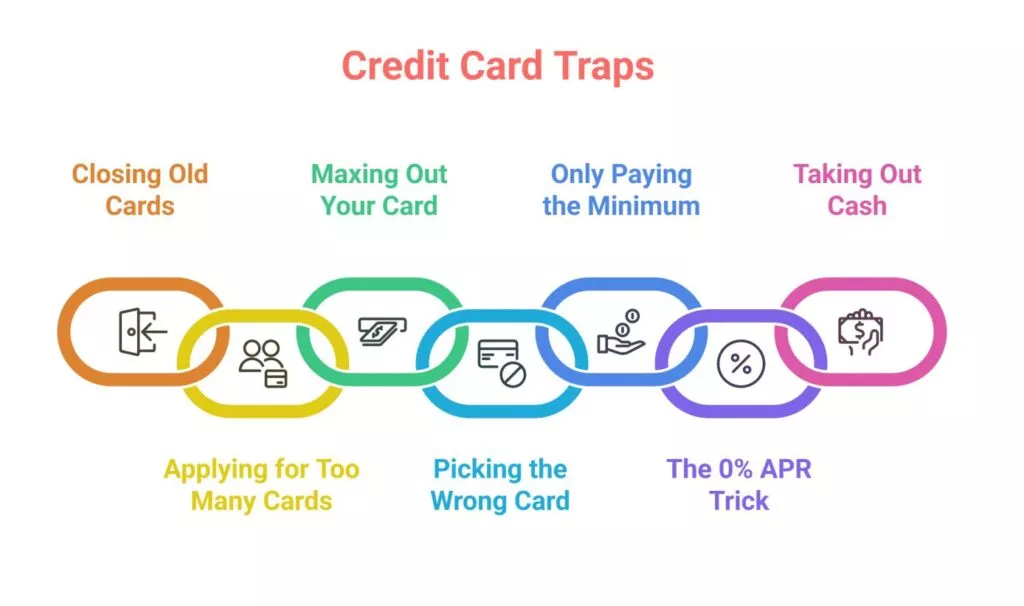
7 Credit Card Mistakes That Quietly Drain Your Money. Here are some lesser-known credit card mistakes that could cost you money High-Cost Repayment Habits How you pay your monthly bill directly impacts how much interest and extra fees you accumulate over time: 1. Paying Only the Minimum Balance: Making minimum payments causes compound interest to accumulate rapidly, extending repayment timelines and turning modest purchases into long-term, high-interest debt. 2. Missing Payment Due Dates: Late payments trigger immediate late fees, lower your credit score, and can activate penalty APRs that push interest rates above 29%. 3. Carrying a Balance to "Build Credit": Holding an ongoing balance does not improve credit scores—it is an expensive myth. Paying off your statement balance in full builds credit without accruing interest charges. High-Fee Utilization and Cash Traps Certain transaction types and habits generate immediate, unnecessary out-of-pocket expenses: 4. Requesting Credit Card Cash Advances: Cash advances incur upfront transaction fees (typically 3% to 5%) and start accruing interest immediately without a grace period, often at elevated APRs. 5. Overlooking Foreign Transaction and Annual Fees: Using cards with foreign transaction surcharges (usually 3%) while traveling or keeping high-annual-fee cards without utilizing their benefits creates recurring financial losses. Credit Score and Account Management Pitfalls Mismanaging credit limits and account histories can harm your overall financial standing: 6. Maxing Out Available Credit Limits: Using more than 30% of your total credit limit spikes your credit utilization ratio, which lowers your credit score and signals higher risk to lenders. 7. Closing Old Credit Card Accounts: Closing your oldest credit card shortens your average credit history and reduces total available credit, negatively affecting your overall score. Credit Card Mistake Impact Matrix Mistake Category Immediate Financial Cost Long-Term Credit & Account Impact Minimum Payments Only High monthly interest charges Extended debt payoff timelines Late Due Dates Instant late fees & penalty APR rates Negative marks on credit history Cash Advances Upfront 3%–5% fee + instant interest Elevated short-term debt burden High Utilization (>30%) Increased risk of over-limit fees Lowered credit score rating Credit Insight: Paying your statement balance in full every month eliminates interest charges completely, allowing you to build credit at zero interest cost. Common FAQs 1. Does carrying a monthly credit card balance help build credit? No. Carrying a balance does not increase your credit score and results in interest charges. Paying off your balance in full each month builds positive credit history without interest. 2. How does a credit card cash advance differ from a regular purchase? Cash advances lack a interest-free grace period, meaning interest begins accumulating immediately upon withdrawal alongside an upfront processing fee (usually 3% to 5%). 3. What is the recommended credit utilization ratio to protect your score? It is best to keep total credit utilization below 30% across all credit cards—and ideally under 10%—to maintain strong credit scores and avoid risk flags. Key Takeaways Pay Balances in Full: Settle your statement balance each month to avoid interest charges entirely. Avoid Fee Traps: Skip cash advances and check for foreign transaction fees before traveling abroad. Maintain Low Utilization: Keep credit usage under 30% of your total limit to preserve strong credit scores. Keep Old Accounts Open: Leave older, no-fee credit cards active to protect the length of your credit history.

Home Insurance in 2026: How to Find Affordable Coverage and Avoid Costly Mistakes
Finding Affordable 2026 Home Insurance Without Costly Mistakes. Uncover lesser-known Home Insurance insights which helps in finding affordable coverage and avoid costly mistakes too. Strategies for Securing Affordable Home Insurance in 2026 Navigating home insurance rates in 2026 requires a proactive approach to risk management and policy optimization: Bundle Multiple Policies: Combining homeowners coverage with auto or umbrella insurance through a single provider often secures annual premium discounts between 15% and 25%. Optimize Deductible Structures: Raising your out-of-pocket deductible from $1,000 to $2,500 can significantly lower monthly premiums while maintaining protection against major catastrophic losses. Install Risk Mitigation Hardware: Upgrading home safety with monitored security alarms, smart water leak detectors, impact-resistant roofing, or automatic shut-off valves qualifies your home for preventative underwriting discounts. Compare Regional Carrier Quotes: Request quotes from multiple independent agents and online platforms annually to ensure your coverage aligns with competing market rates. Costly Home Insurance Mistakes to Avoid Protecting your financial health means guarding against common policy oversights that lead to claim denials or out-of-pocket gaps: Confusing Real Estate Value with Rebuilding Costs: Insuring your home for its market real estate value rather than its actual structural rebuilding cost leads to overpaying for land that does not require insurance. Opting for Actual Cash Value (ACV) Over Replacement Cost (RCV): Settling for ACV coverage on your roof or personal property means insurers subtract depreciation for age and wear, leaving you with high out-of-pocket repair costs. Ignoring Essential Coverage Exclusions: Standard home policies exclude damage caused by floods, earthquakes, and sewer backups; failing to purchase separate endorsements leaves homes completely unprotected against these disasters. Filing Small Maintenance Claims: Submitting minor claims for small repairs can trigger premium surcharges or risk non-renewal; save insurance usage for major structural damage. 2026 Home Insurance Decision Matrix Coverage Element Recommended Best Practice Costly Mistake to Avoid Dwelling Coverage Base limits strictly on estimated local construction costs Basing coverage on total real estate purchase price Valuation Type Secure Replacement Cost Value (RCV) for dwelling & contents Accepting Actual Cash Value (ACV) roof endorsements Risk Exclusions Add separate riders for flood, sewer backup, & earthquake Assuming standard policies cover water backup or floods Claim Strategy Reserve policy usage for catastrophic losses above deductible Filing frequent small claims for routine home repairs Insurance Tip: Review your policy declarations page annually to verify that structural replacement cost limits keep pace with changing local labor and building material expenses. Common FAQs 1. How can homeowners lower their insurance premiums in 2026 without sacrificing essential protection? Homeowners can lower premiums by bundling home and auto policies, increasing out-of-pocket deductibles, installing monitored security or smart leak detectors, and shopping quotes annually across regional carriers. 2. What is the most expensive mistake homeowners make when choosing a policy? The most costly mistake is choosing Actual Cash Value (ACV) instead of Replacement Cost Value (RCV) for roofs and personal belongings, which deducts heavy depreciation during claim payouts. 3. Do standard homeowners insurance policies cover flood or sewer backup damage? No. Standard homeowners insurance policies specifically exclude damage from rising floodwaters and drain or sewer backups; separate flood insurance policies or policy endorsements are required. Key Takeaways Right-Size Dwelling Limits: Insure your property based on local structural rebuilding costs rather than market land value. Choose Replacement Cost: Opt for RCV coverage to protect against depreciation deductions on roofs and personal items. Mitigate Property Risk: Install security systems and smart leak sensors to unlock carrier discounts. Avoid Minor Claims: Pay for small home repairs out of pocket to protect your claim-free discount and keep premiums low.

Replacement Cost vs. Actual Cash Value: Which Is Right for Your Home?
Decoding Home Coverage with Replacement Cost vs Actual Cash Value. Here are the lesser-known insights on RCV and ACV. Understanding How Insurance Payouts Work When filing a homeowners insurance claim for structural damage or stolen personal items, the valuation method written into your policy determines your out-of-pocket settlement. Insurance carriers calculate claims using two primary formulas: Replacement Cost Value (RCV) or Actual Cash Value (ACV). What Is Replacement Cost Value (RCV)? Replacement Cost Value pays to repair or replace damaged property with new items of similar kind and quality at current market prices, without subtracting for wear, tear, or age. Full Rebuilding Power: If a 10-year-old roof or 5-year-old sofa is destroyed in a covered event, RCV reimburses the real cost to construct or purchase a brand-new equivalent today. Two-Step Claim Payout: Insurers typically issue an initial check for the depreciated value (ACV), then release the remaining "recoverable depreciation" balance after you submit official repair or replacement receipts. What Is Actual Cash Value (ACV)? Actual Cash Value reimburses you for the current market value of the property at the time of loss, factoring in depreciation caused by age, usage, and deterioration. Depreciation Deduction: The insurer calculates what it costs to replace the item brand-new today, then subtracts a percentage based on its age and condition. Higher Out-of-Pocket Risk: If a 15-year-old roof is destroyed, an ACV payout reflects only its remaining useful lifespan value, leaving you to pay thousands out of pocket to install a complete replacement. RCV vs. ACV Coverage Comparison Matrix Coverage Feature Replacement Cost Value (RCV) Actual Cash Value (ACV) Depreciation Deduction No (Reimburses brand-new replacement cost) Yes (Subtracts for age, wear, and tear) Out-of-Pocket Expense Lower (Covers full repair/replacement costs) Higher (Homeowner pays the depreciation gap) Monthly Premium Cost Higher (Typically 10% to 20% more expensive) Lower (Budget-friendly short-term premiums) Best Suited For Primary residences, new roofs, & core structures Older structures, budget plans, & aging assets Insurance Insight: Many homeowners policies feature RCV for the main home structure (Dwelling Coverage) but default to ACV for personal belongings or aging roofs—always check your policy declarations page for "Roof Surface ACV Endorsements". Common FAQs 1. Is Replacement Cost Value always better than Actual Cash Value? For structural dwelling protection and essential belongings, RCV is generally better because it prevents massive out-of-pocket costs after a severe disaster. However, ACV may make sense for non-essential structures or property owners prioritizing the lowest possible monthly premium. 2. Why do insurers place Actual Cash Value endorsements on older roofs? Because roofs deteriorate naturally over 15 to 20 years, carriers use ACV roof endorsements to limit their financial risk on aging materials, requiring homeowners to share in the cost of a new roof installation. 3. Can I upgrade my policy from Actual Cash Value to Replacement Cost? Yes. You can contact your insurance agent to add a Replacement Cost endorsement to your personal property or roof coverage, which will slightly increase your annual premium. Key Takeaways Know the Depreciation Impact: RCV covers full current replacement costs, while ACV deducts for age and wear. Review Policy Endorsements: Confirm whether your personal property and roof carry RCV or ACV settlement terms. Balance Premium vs. Risk: ACV lowers monthly bill costs but exposes you to high out-of-pocket bills during a claim. Document Property Inventory: Maintain receipts, photos, and serial numbers to support full RCV claim payouts after a loss.

How to Find Affordable Home Insurance Without Sacrificing Coverage
Slash Home Insurance Costs Without Cutting Protection. Uncover lesser-known affordable home insurance insights Lowering home insurance premiums without undermining structural or financial protection requires a targeted, strategic approach. Homeowners can secure competitive rates by optimizing policy structures, eliminating redundant fees, and leveraging risk-mitigation discounts. Optimize Deductibles to Balance Monthly Premiums Adjusting your out-of-pocket deductible is one of the most immediate ways to reduce premium costs without lowering overall coverage limits. Increasing a deductible shifts minor claim costs to the homeowner while preserving full financial protection against catastrophic events. Deductible Adjustment Typical Annual Premium Savings Risk Management Impact $500 to $1,000 10% – 15% Moderate out-of-pocket increase for minor repairs $1,000 to $2,500 15% – 25% Ideal for homeowners with solid emergency funds $2,500 to $5,000 25% – 35% Maximum premium savings; best reserved for major structural losses Capitalize on Multi-Policy and Loyalty Discounts Carriers offer significant rate reductions for consolidating multiple insurance lines or maintaining clean records. Policy Bundling: Combining homeowners insurance with auto or umbrella coverage can cut total annual premiums by 15% to 25%. Claim-Free History: Remaining claim-free for three to five consecutive years unlocks tier-based rate discounts. Automated Payments: Setting up automatic payments and paperless billing yields small, effortless recurring savings. Fortify the Property to Lower Underwriting Risk Insurance providers reward homeowners who proactively reduce risk factors that lead to common property claims. Security Systems: Centrally monitored burglar and fire alarms often qualify policies for discounts between 5% and 15%. Roof Modernization: Replacing an aging roof with impact-resistant shingles lowers vulnerability to wind and hail damage, dropping dwelling premium tiers. Smart Home Sensors: Installing smart leak detectors and automatic water shut-off valves prevents major water damage claims and triggers preventative safety discounts. Refine Coverage Terms to Insure Structure, Not Land Value A common cost driver is insuring property based on market real estate value rather than actual construction costs. Distinguish Land Value: Real estate market value includes land, which does not require insurance protection against fire or storm hazards. Base your dwelling policy strictly on estimated local rebuilding costs. Audit Personal Property Schedules: Review high-value policy add-ons annually. Adjust endorsements for jewelry, electronics, or fine art to match current market appraisals rather than outdated valuations. Re-evaluate Liability Limits: Maintain adequate umbrella liability coverage separately if it offers higher protection at a lower unit cost than inflating basic homeowners liability limits. Comparison Shopping and Rate Auditing Evaluating carrier quotes every one to two years ensures pricing stays aligned with prevailing market trends. Obtaining quotes from at least three independent agents or online platforms exposes pricing variations across regional underwriting pools. Always verify each carrier's financial stability rating through A.M. Best or Demotech to guarantee reliable claims handling during major local disasters.

Health Insurance: Buy Medical Insurance Plans @₹10/Day* – Affordable Health Cover in India
Health insurance has become an important financial protection tool for individuals and families in India as medical treatment costs continue to rise. An affordable health insurance plan can help cover eligible hospitalisation expenses and reduce the financial impact of unexpected medical emergencies. With online comparison and digital policy purchase options, consumers can now explore medical insurance plans, compare coverage, and request a health insurance quote without visiting multiple offices. Offers advertised from around ₹10/day* may look attractive, but the actual premium depends on factors such as age, location, coverage amount, medical history, policy features, and insurer. Why Health Insurance Is Important in India A sudden hospitalisation can create a significant financial burden even for households with regular income. Health insurance provides financial protection by covering eligible medical expenses according to the terms, limits, exclusions, and conditions of the policy. People searching for affordable health insurance increasingly compare plans that provide a balance between premium affordability and meaningful coverage. Choosing a suitable policy early can also help individuals plan for future healthcare expenses instead of relying entirely on personal savings. How Affordable Health Insurance Plans Work The cost of a health insurance policy is influenced by several personal and policy-related factors, so there is no single premium that applies to everyone. A plan promoted at a low daily equivalent price should be understood as an illustrative starting price rather than a guaranteed premium for every applicant. When comparing an affordable health insurance quote, consumers should look beyond the headline price and review the sum insured, room-rent limits, waiting periods, exclusions, deductibles, co-pay requirements, restoration benefits, and network hospital availability. Individual and Family Health Insurance Options Individual health insurance is designed to provide coverage for a specific insured person, while family-oriented policies can cover multiple eligible members under a single policy structure. Consumers looking for the best individual health insurance should compare the amount of coverage with their expected healthcare requirements and budget. Families may also consider personal health insurance plans that provide broader protection for spouses, children, or parents depending on the policy structure. The best health insurance plans for family needs can vary significantly based on the ages of family members, medical history, location, and desired coverage. What to Check Before Buying Medical Insurance Before purchasing medical insurance, it is important to understand exactly what the policy covers and what it does not. A low premium does not necessarily mean better value if important treatments are excluded or significant limits apply. Consumers should review hospitalisation coverage, pre- and post-hospitalisation benefits, daycare procedures, ambulance expenses, preventive benefits where applicable, and the policy's claim conditions. Checking the waiting period for pre-existing diseases is particularly important because coverage for certain conditions may begin only after the specified waiting period. Cashless Hospitalisation and Network Hospitals Cashless treatment can make the claims process more convenient when treatment is received at an eligible network hospital and the claim meets the insurer's policy conditions. Before purchasing a plan, consumers should check whether hospitals in their city or preferred healthcare network are included. A wide network can be particularly useful when selecting health insurance for family members who may require treatment in different locations. Policyholders should also understand that cashless treatment does not automatically mean every medical expense is covered, as exclusions, deductibles, limits, and policy terms still apply. Health Insurance for Families and Parents Healthcare requirements can change significantly as family members grow older. Parents and senior citizens may have different coverage needs because healthcare utilisation can increase with age. When comparing family health insurance, consumers should examine whether parents are covered under the same policy or whether separate coverage may be more appropriate. Premiums can also vary substantially depending on age and medical history, making it important to compare plans rather than selecting a policy solely because it has the lowest advertised price. Tax Benefits on Health Insurance Premiums Health insurance can also have potential tax advantages for eligible taxpayers under the applicable tax rules. The Income Tax Department currently states that Section 80D provides deductions for eligible health insurance premiums and preventive health check-ups, with higher limits in specified cases involving senior citizens. The applicable rules depend on the taxpayer's circumstances and tax regime, so consumers should verify current eligibility before relying on a tax benefit when calculating the overall value of a policy. Compare Health Insurance Before You Buy Comparing multiple policies can help consumers identify differences in premiums, coverage limits, exclusions, waiting periods, deductibles, and claim-related conditions. An online health insurance comparison can make it easier to evaluate different options based on age, family size, location, and desired coverage amount. Consumers searching for the best health insurance plans should avoid choosing solely on price and instead consider the overall value and suitability of the policy. Can You Really Get Health Insurance for ₹10 a Day? The phrase ₹10/day* can be an attractive way of presenting an annual premium as a daily equivalent, but it should not be interpreted as a universal price for every person or every policy. Actual premiums can be higher depending on the applicant's age, coverage requirements, location, health profile, insurer, and selected benefits. Anyone considering such an offer should check the final premium, applicable taxes, policy terms, coverage amount, exclusions, and eligibility conditions before purchasing. Why Buying Health Insurance Online Can Be Convenient Online insurance platforms allow consumers to compare policies, review coverage details, calculate premiums, and complete applications digitally. This can make the process faster and provide access to multiple options without requiring repeated visits to insurance offices. Consumers can also review policy documents and understand important conditions before making a purchase. However, it is still important to verify that the insurer and policy are legitimate and to read the official policy wording before paying for coverage. Choosing the Right Coverage Amount The appropriate sum insured depends on factors such as location, age, family size, healthcare costs, and existing medical coverage. Someone living in a major metropolitan area may consider a different level of coverage from someone living in a smaller city because hospital costs can vary considerably. Consumers should also consider whether employer-provided health insurance is sufficient or whether an additional personal policy could provide greater financial protection. Final Thoughts Affordable health insurance can provide valuable financial protection against unexpected medical expenses, but the cheapest advertised premium should not automatically be considered the best option. The ₹10/day* figure may represent an illustrative starting price, while actual premiums depend on individual circumstances and selected coverage. Comparing medical insurance plans based on coverage, exclusions, waiting periods, network hospitals, claim conditions, and overall cost can help consumers make a more informed decision. For anyone searching for an affordable health insurance quote, the most useful approach is to compare available policies carefully and review the final terms before purchasing. A suitable plan should provide meaningful protection while remaining affordable enough to maintain over the long term.

MBA Study Guide: 7 Top-Ranked Universities in the USA
A Master of Business Administration (MBA) remains one of the most popular graduate degrees for students seeking leadership, management, and business expertise. MBA programs help students develop skills in finance, marketing, operations, strategy, entrepreneurship, and organisational leadership while providing valuable networking opportunities. The United States is home to many globally recognised business schools. While rankings may vary depending on methodology, several universities consistently appear among the most respected MBA institutions. This guide explores seven well-known MBA universities and highlights important factors prospective students should consider before applying. Why Pursue an MBA? MBA programs are designed to prepare students for leadership roles across various industries. Students often pursue an MBA to: Develop advanced business knowledge Build leadership and management skills Expand professional networks Explore career advancement opportunities Gain exposure to global business practices Strengthen decision-making abilities The right MBA program depends on individual career goals, learning preferences, and professional interests. 1. Harvard Business School Located in Cambridge, Massachusetts, Harvard Business School is known for its case-study teaching approach and extensive global alumni network. Highlights Leadership-focused curriculum Real-world business case studies Strong alumni connections Diverse student community Entrepreneurship resources Many students value Harvard's emphasis on decision-making and leadership development. 2. Stanford Graduate School of Business Situated in California's Silicon Valley, Stanford offers strong connections to the technology and startup sectors. Highlights Entrepreneurial environment Small class sizes Innovation-focused culture Access to technology networks Leadership development opportunities Stanford is often considered by students interested in entrepreneurship and emerging technologies. 3. The Wharton School (University of Pennsylvania) The Wharton School is widely recognized for strengths in finance, analytics, and business strategy. Highlights Flexible curriculum Strong quantitative focus Global business opportunities Extensive elective options Large professional network Wharton attracts students interested in finance, consulting, and corporate leadership. 4. MIT Sloan School of Management Located in Cambridge, Massachusetts, MIT Sloan combines business education with technology and innovation. Highlights Technology-driven curriculum Data analytics focus Innovation and entrepreneurship resources Cross-disciplinary learning Strong research opportunities Students often choose MIT Sloan for its blend of business and technology education. 5. Chicago Booth School of Business Chicago Booth is known for its analytical approach to business education and flexible academic structure. Highlights Data-driven decision-making focus Flexible course selection Strong finance reputation Research-oriented faculty Global learning opportunities The program appeals to students seeking a rigorous analytical foundation. 6. Kellogg School of Management (Northwestern University) Located near Chicago, Kellogg is recognized for leadership development and collaborative learning experiences. Highlights Team-based learning environment Marketing expertise Leadership training programs Strong alumni network Global study opportunities Kellogg emphasizes collaboration and communication skills alongside traditional business education. 7. Columbia Business School Situated in New York City, Columbia Business School offers direct access to one of the world's leading financial and business centers. Highlights Strong industry connections Access to global corporations Finance and investment opportunities Diverse student population Extensive networking possibilities Its location provides students with opportunities to engage with business professionals across multiple industries. Factors to Compare Beyond Rankings Although rankings can provide useful insights, they should not be the sole factor when selecting an MBA program. Curriculum Structure Different schools use different teaching methods, including: Case studies Experiential learning Research projects Team-based assignments Simulations and workshops Students should evaluate which learning style aligns with their preferences. Specializations Many MBA programs offer concentrations in areas such as: Finance Marketing Entrepreneurship Technology Management Operations Healthcare Management Supply Chain Management Choosing a program with strengths in a desired specialization can support long-term career goals. Career Services Career support services often include: Internship placement assistance Resume coaching Employer networking events Interview preparation Recruitment opportunities Strong career services can be valuable when pursuing post-graduation employment opportunities. Cost and Financial Aid MBA programs can vary significantly in cost. Prospective students should compare: Tuition expenses Living costs Scholarships Grants Assistantships Loan options Understanding total costs can help support informed financial planning. Questions to Ask Before Applying Before selecting an MBA program, prospective students may wish to ask: What industries recruit from this school? What internship opportunities are available? How active is the alumni network? What career support services are offered? Are global study opportunities available? What specialisations can students pursue? Answers to these questions can provide valuable insights beyond published rankings. Final Thoughts Harvard Business School, Stanford Graduate School of Business, The Wharton School, MIT Sloan, Chicago Booth, Kellogg School of Management, and Columbia Business School are among the most recognized MBA institutions in the United States. Each offers unique strengths, educational approaches, and professional opportunities. By carefully comparing curriculum, specializations, career services, costs, and personal goals, prospective students can make a more informed decision about their MBA journey.

Cyber Insurance Guide 2026 – Why Businesses Across the USA Are Investing in Digital Protection
Cyber insurance has become one of the fastest-growing business insurance categories in the United States as companies face increasing risks from data breaches, ransomware attacks, phishing scams, and network disruptions. Businesses of all sizes are now searching for cyber insurance coverage, cyber liability insurance, business cyber protection, and data breach insurance because digital threats continue becoming more sophisticated each year. In 2026, cyber insurance is no longer viewed as an optional policy. Instead, it has become an essential part of risk management for organizations that rely on online systems, cloud platforms, customer databases, and digital operations. The rapid growth of remote work, cloud computing, artificial intelligence, and e-commerce has created new opportunities for businesses, but it has also increased exposure to cyber threats. Companies searching for business insurance quotes and cyber liability coverage are increasingly looking for protection against financial losses caused by hacking incidents, ransomware demands, legal claims, and operational disruptions. As cyberattacks continue affecting organizations across multiple industries, demand for cyber insurance solutions is expected to remain strong throughout 2026 and beyond. Why Cyber Insurance Is Becoming Essential Modern businesses depend heavily on digital technology for communication, payments, customer management, and daily operations. A single cyber incident can lead to financial losses, reputational damage, legal expenses, and extended downtime. This growing risk is one reason searches for cyber insurance policies and business liability insurance continue increasing across the USA. Many companies now understand that traditional business insurance policies may not fully cover digital threats. Cyber insurance is designed specifically to address risks related to data breaches, network failures, ransomware attacks, and unauthorized access to sensitive information. Businesses operating in sectors such as healthcare, finance, legal services, retail, education, and technology often consider cyber protection a critical investment. What Cyber Insurance Typically Covers Cyber insurance policies can vary significantly depending on the insurer, business size, and industry requirements. Most policies focus on helping organizations recover financially after cyber incidents while supporting business continuity during disruptions. Businesses searching for cyber liability insurance often look for protection related to data recovery costs, legal defense expenses, regulatory penalties, customer notification requirements, ransomware incidents, and system restoration services. Some policies may also include public relations support to help companies manage reputational damage after security breaches. As cyber risks continue evolving, insurance providers are expanding coverage options to address emerging threats associated with cloud systems, artificial intelligence, and digital infrastructure. Small Businesses Are Increasingly Buying Cyber Insurance Large corporations are not the only organizations facing cyber risks. Small and medium-sized businesses have become frequent targets because attackers often assume they have weaker security systems. Searches for small business cyber insurance and affordable cyber liability coverage continue increasing because smaller companies want protection without large insurance costs. Many small businesses rely heavily on online payments, customer databases, email systems, and cloud software, making them vulnerable to cyber incidents. Even a brief disruption caused by malware or ransomware can create significant financial losses for smaller organizations. This is why cyber insurance is becoming increasingly important across businesses of all sizes. Ransomware Attacks Continue Driving Demand Ransomware remains one of the biggest concerns for organizations across the USA. Cybercriminals increasingly target businesses by encrypting important files and demanding payment for data recovery. Companies searching for ransomware insurance and cybersecurity coverage are looking for financial protection against these costly attacks. Some cyber insurance policies help cover expenses related to incident response, forensic investigations, legal assistance, and business interruption losses. As ransomware threats continue evolving, insurers are also encouraging stronger cybersecurity practices among policyholders to reduce risk exposure. Cyber Insurance Supports Regulatory Compliance Data privacy regulations continue expanding across multiple industries, making cyber risk management more important than ever. Businesses handling customer information may face legal obligations related to data protection and breach notification requirements. Organizations searching for data breach insurance and cyber compliance solutions often want support in managing potential legal and regulatory costs following security incidents. Cyber insurance can help companies respond more effectively while reducing the financial impact of compliance-related challenges. As digital regulations become stricter, cyber insurance is increasingly viewed as part of broader corporate governance and risk management strategies. The Role of Cybersecurity in Insurance Pricing Insurance companies evaluate many factors when determining cyber insurance premiums. Businesses with stronger cybersecurity practices often receive more favorable pricing because they represent lower risk. Insurers may review areas such as employee training, password policies, data backups, multi-factor authentication, network monitoring, and incident response planning. Searches for cybersecurity services and cyber risk assessment continue increasing because businesses understand that better security can help reduce both risks and insurance costs. Strong cybersecurity and cyber insurance now work together as complementary tools for business protection. Industries With the Highest Demand for Cyber Insurance Certain industries have become major buyers of cyber insurance due to their reliance on sensitive data and digital operations. Healthcare organizations, financial institutions, law firms, e-commerce companies, educational institutions, and technology providers often face higher exposure to cyber threats. Businesses in these sectors frequently search for professional liability insurance, cyber liability coverage, and business protection solutions because security incidents can have serious financial and legal consequences. As digital transformation continues expanding across all industries, cyber insurance demand is expected to spread even further. Artificial Intelligence Is Changing Cyber Risks Artificial intelligence is transforming both cybersecurity and cybercrime. Businesses increasingly use AI tools for automation, analytics, customer support, and operational efficiency, but cybercriminals are also adopting advanced technologies to create more sophisticated attacks. Companies searching for AI cybersecurity and advanced cyber protection are becoming more aware of the need for stronger defenses. Insurance providers are also adapting policies to address risks associated with AI systems, automated decision-making, and complex digital environments. Future cyber insurance products are expected to evolve alongside technological innovation. How Businesses Can Reduce Cyber Risk Cyber insurance works best when combined with strong security practices. Businesses are investing more in employee awareness training, secure networks, cloud security, threat monitoring, and regular software updates to reduce vulnerabilities. Searches for cybersecurity solutions, managed security services, and cyber risk management continue growing because organizations understand that prevention remains one of the most effective ways to reduce losses. Companies that prioritize digital security are often better prepared to withstand cyber incidents and maintain business continuity. The Future of Cyber Insurance in the USA The cyber insurance market is expected to expand rapidly as businesses continue digitizing operations and cyber threats become more complex. Experts predict growing demand for specialized policies covering artificial intelligence, cloud services, supply chain risks, and emerging technologies. Searches for cyber insurance quotes, cyber liability coverage, and business protection plans are likely to remain strong throughout 2026 as organizations focus more heavily on digital resilience. Cyber insurance is increasingly becoming a standard component of modern business strategy rather than a niche financial product. Final Thoughts Cyber insurance is playing a critical role in helping businesses manage digital risks in 2026. Whether protecting against ransomware, data breaches, legal expenses, or operational disruptions, cyber liability coverage provides valuable financial support in an increasingly connected world. As businesses continue adopting cloud systems, remote work technologies, and AI-driven solutions, cyber insurance is expected to remain one of the most important investments for organizations seeking long-term digital security and business stability.

What Should Every Homeowner Compare Before Buying Insurance?
A home is one of the most significant investments many people make during their lifetime. Buying a home is one of the biggest financial decisions many people make, and protecting that investment is an important part of long-term planning. Home insurance is designed to provide financial protection against certain covered events, but not every policy offers the same level of coverage. With many insurance providers and policy options available, choosing the right plan can sometimes feel overwhelming. Rather than selecting the first policy you come across, it's worth taking the time to compare different coverage options. Understanding what policies include, how they differ, and which features are most relevant to your situation can help you make a more informed decision. Before buying home insurance, here are several key areas every homeowner should review. Understand What the Policy Covers One of the first things to compare is the type of protection each policy offers. While most home insurance plans include coverage for the structure of your home, the details can vary from one insurer to another. Some policies may also provide protection for detached structures, personal belongings, and liability claims. Reading the policy summary carefully helps you understand exactly what is included. Instead of assuming all plans are the same, compare the scope of coverage and make sure it aligns with your home's value and your personal needs. Compare Coverage Limits Coverage limits determine the maximum amount an insurance provider may pay for a covered claim. These limits can differ significantly between policies, making them an important factor when comparing options. For example, one policy may provide higher protection for personal belongings, while another may place greater emphasis on the home's structure. Reviewing these limits carefully helps homeowners understand how much financial protection each policy offers and whether additional coverage may be worth considering. Review Deductible Options A deductible is the amount a policyholder typically pays before insurance coverage applies to a covered claim. Different insurance providers may offer several deductible choices, each affecting the overall policy. Some homeowners prefer a lower deductible, while others may choose a higher deductible depending on their financial situation. Understanding how deductibles work allows you to compare policies based on both coverage and overall cost rather than focusing on one factor alone. Learn About Policy Exclusions Every insurance policy contains exclusions, which are situations or events that may not be covered. These exclusions vary depending on the insurer and policy type. Before making a decision, it's important to review the policy documents and understand which situations may require separate coverage or additional protection. Taking the time to understand exclusions can help reduce unexpected surprises later and provide a clearer picture of the policy's overall value. Compare Optional Coverage Features Many insurance providers offer optional endorsements or additional protection that can be added to a standard policy. Depending on the insurer, these options may include coverage for valuable personal belongings, water backup protection, equipment breakdown, identity theft assistance, or other specialized situations. Although not every homeowner will need these additional features, comparing available options allows you to customize coverage based on your circumstances. Reviewing optional protections alongside the standard policy can help you better understand the choices available. Consider Customer Service and Claims Support Price and coverage are important, but customer service also plays a significant role when choosing an insurance provider. Many homeowners compare companies based on how they handle customer questions, policy updates, and claims. Reading customer reviews and learning about the claims process can provide useful insights into the overall experience offered by different insurers. A provider with responsive customer support and a straightforward claims process may offer additional peace of mind throughout the life of the policy. Compare More Than Just Price Many people naturally focus on premium costs when shopping for home insurance. While affordability is an important consideration, the lowest-priced policy may not always provide the most suitable coverage. Instead of comparing price alone, review what each policy includes, the available coverage limits, deductible options, optional features, and customer support. Looking at the complete package can help you identify the option that provides the best overall value for your situation. Research the Insurance Provider Choosing an insurance company involves more than selecting a policy. Homeowners often research the provider's reputation, years of experience, financial strength, and customer satisfaction before making a decision. Established insurers often provide detailed online resources, digital policy management tools, and multiple customer support channels. Comparing providers as well as policies can help you feel more confident about your final choice. Review Your Needs Regularly Your insurance needs may change over time. Home improvements, renovations, valuable purchases, or changes in household circumstances can affect the type of coverage that best suits your home. Reviewing your policy periodically allows you to determine whether your current coverage still matches your needs. Many homeowners choose to compare policies every few years to stay informed about available options and features. Final Thoughts Home insurance is more than just a monthly expense—it is an important part of protecting one of your most valuable assets. Because policies can vary in terms of coverage, deductibles, exclusions, and optional features, comparing multiple options before making a decision is a smart approach. By reviewing coverage details, understanding policy limits, evaluating deductibles, and researching insurance providers, homeowners can make more informed choices. Taking a little extra time to compare home insurance options today can help you better understand the protection available and choose a policy that aligns with your home, budget, and long-term needs.

Home Insurance Plans – Explore Coverage & Protection Options
Home insurance is an important part of protecting your property and belongings from unexpected events. Whether you own a house, condominium, or rental property, understanding different insurance plans can help you choose coverage that matches your needs and budget. With many policy types and coverage options available today, comparing plans carefully is essential before making a decision. Why Home Insurance Matters A home is often one of the biggest investments people make. Home insurance is designed to help provide financial protection in situations involving property damage, theft, or certain unexpected events covered by a policy. Many homeowners explore insurance plans to help with: Property damage protection Personal belongings coverage Liability protection Temporary living expenses in covered situations Coverage details vary depending on the insurance provider and policy terms. Common Types of Home Insurance Coverage Home insurance plans may include several different types of protection. 1. Dwelling Coverage Dwelling coverage is designed to help protect the structure of the home itself, including walls, roofs, and attached features, depending on the policy terms. 2. Personal Property Coverage This type of coverage may help protect personal belongings such as furniture, electronics, or clothing if covered events occur. 3. Liability Protection Liability coverage may help in situations involving accidental injuries or property damage affecting others, depending on the policy. 4. Additional Living Expense Coverage Some plans may include support for temporary living expenses if a covered event makes the home temporarily unlivable. Factors That Affect Home Insurance Costs Insurance pricing can vary depending on several important factors. Some common influences include: Home size and location Property age and construction type Local weather and environmental risks Security systems and safety features Coverage limits and deductibles Understanding these factors can help homeowners compare plans more effectively. How to Compare Home Insurance Plans Before selecting a policy, it’s important to compare more than just price. Helpful things to review include: Coverage limits and exclusions Deductible amounts Claim process and customer support Optional add-on protections Financial strength and reputation of the insurer A lower price may not always provide the level of protection you need. Optional Coverage Additions Some homeowners choose optional coverage depending on their property and lifestyle. Examples may include: Flood or water damage protection Coverage for valuable items Extended replacement cost options Identity theft or cyber protection services Availability varies depending on the provider and region. Tips for Choosing the Right Plan When comparing home insurance options, consider these helpful tips: Review your property value carefully Create a list of important belongings Compare multiple insurance providers Understand policy exclusions and limitations Ask questions about discounts or bundled plans Careful research can help you make a more informed decision. Common Mistakes to Avoid When selecting home insurance, avoid these common mistakes: Choosing coverage based only on the lowest price Ignoring policy exclusions Underestimating property replacement costs Failing to update coverage after renovations or upgrades Regularly reviewing your insurance plan can help maintain appropriate protection over time. Benefits of Home Insurance Coverage Home insurance can provide peace of mind by helping homeowners prepare for unexpected situations. Potential benefits may include: Financial support after covered events Protection for property and belongings Liability coverage for certain incidents Assistance with temporary living arrangements in some cases Coverage details depend on the selected policy and provider. Final Thoughts Home insurance plans are designed to help homeowners protect their property, belongings, and financial well-being. By comparing coverage options, understanding policy details, and reviewing long-term needs carefully, homeowners can choose plans that better match their situation.

Cheapest Life Insurance in the UK 2026 – Compare Quotes & Find the Best Cover
Life insurance continues to be one of the most important financial products for families in the United Kingdom as living costs, mortgage payments, and long-term financial responsibilities continue increasing. More people across the UK are now searching for affordable life insurance, term life insurance quotes, and best life insurance policy options to secure financial protection for their loved ones. In 2026, the UK insurance market offers a wide range of coverage options designed for different budgets and life stages. Whether someone is looking for low-cost protection, mortgage cover, or long-term family security, comparing policies carefully can help reduce premiums while maximizing benefits. Why Life Insurance Is Important in the UK Life insurance provides a financial payout to beneficiaries if the policyholder passes away during the policy term. This money can help families manage mortgage repayments, household expenses, childcare costs, debts, and future financial obligations. As inflation and everyday living costs continue rising across the UK, many households now view life insurance as an essential part of long-term financial planning. Searches for life insurance quotes online have increased significantly because consumers want affordable protection without overpaying for coverage. For families with children or major financial commitments, life insurance offers peace of mind and greater financial stability during uncertain situations. Term Life Insurance Remains the Most Popular Option Term life insurance continues to be the most affordable and widely chosen type of coverage in the UK. These policies provide protection for a fixed number of years, such as 10, 20, or 30 years, while keeping monthly premiums relatively low. Consumers searching for cheap term life insurance often choose this option because it provides high coverage amounts at affordable monthly rates. Younger applicants and non-smokers typically receive the lowest premiums because insurers consider them lower-risk customers. Many homeowners use term insurance to protect mortgage repayments and ensure family members are financially secure if unexpected events occur. Why UK Consumers Compare Insurance Quotes Online Online comparison websites have transformed the insurance industry across the UK. Instead of contacting multiple brokers individually, consumers can now compare prices, benefits, and policy features within minutes. Searches for affordable life insurance UK and best life insurance companies continue increasing because buyers want transparent pricing and competitive coverage options. Comparing multiple insurers often helps customers identify better policies at lower monthly costs. Digital insurance platforms also make it easier to customize policies based on income, family size, and long-term financial goals. Whole Life Insurance Is Growing in Popularity While term life insurance focuses mainly on affordability, whole life insurance provides permanent coverage that remains active throughout the policyholder’s lifetime. Consumers searching for best life insurance policy options often compare whole life and term life plans depending on financial priorities. Whole life insurance policies generally cost more because they provide guaranteed payouts and may include investment or cash value features. These plans are commonly chosen by individuals focused on estate planning, inheritance support, or long-term wealth protection. What Affects Life Insurance Premiums in the UK Several factors influence life insurance pricing in the UK. Insurance providers evaluate applicants based on age, health condition, occupation, smoking habits, and lifestyle choices. Applicants with healthier lifestyles typically qualify for lower premiums and better coverage options. This is why many consumers searching for low cost life insurance apply earlier in life before age or health issues increase pricing. Some insurers may also request medical information or health screenings depending on the level of coverage requested. Mortgage Life Insurance Is Highly Searched in the UK Because property ownership remains a major financial goal across the UK, many homeowners purchase mortgage-related life insurance coverage. Searches for mortgage life insurance and decreasing term insurance continue rising because families want protection that helps cover home loan repayments if the policyholder passes away unexpectedly. These policies are especially popular among younger families purchasing homes with long-term mortgage commitments. Life Insurance for Seniors Continues Expanding More older adults in the UK are now exploring life insurance plans later in life. Searches for over 50 life insurance and senior life cover have increased significantly as retirees look for financial protection and funeral expense coverage. Some insurers offer simplified approval processes and guaranteed acceptance plans designed specifically for older applicants. These policies are often used to help families manage final expenses and reduce financial pressure during difficult times. As retirement planning becomes increasingly important, life insurance continues playing a major role in financial security for older adults. Employer Life Insurance May Not Provide Enough Protection Many UK employees receive some level of life insurance through workplace benefit schemes. However, employer-provided coverage is often limited and may not fully support long-term family financial needs. Workplace policies may also end when changing jobs or retiring. This is one reason searches for private life insurance plans and individual life insurance continue increasing across the UK. Independent policies offer greater flexibility and allow individuals to maintain continuous protection regardless of employment changes. Digital Insurance Applications Are Making Coverage Easier Technology is making life insurance applications faster and more accessible throughout the UK. Many providers now offer instant online quotes, digital document submission, and quicker approvals. Consumers searching for buy life insurance online appreciate the convenience of comparing policies and completing applications from home. Some insurers even provide no medical exam life insurance for eligible applicants through automated systems. Digital innovation is helping insurers attract younger consumers looking for faster and simpler financial products. Demand for Life Insurance Continues Rising Economic uncertainty, inflation, and increasing household expenses continue driving demand for financial protection across the UK. More consumers are proactively searching for affordable life insurance and long-term financial security solutions. Searches for: term life insurance quotes cheap life insurance UK best life insurance companies UK remain strong because consumers want reliable protection for their families and future obligations. Final Thoughts Life insurance remains one of the most important financial investments for families across the UK. Whether choosing affordable term coverage or permanent whole life protection, comparing plans carefully can help consumers secure better coverage at lower monthly costs. As financial responsibilities continue growing in 2026, having the right life insurance policy can provide peace of mind, long-term security, and financial protection for loved ones throughout every stage of life.

Cheapest Life Insurance in Canada 2026 – Compare Plans, Quotes & Save More
Life insurance has become one of the most important financial tools for families in Canada as living costs, mortgage payments, and long-term financial responsibilities continue increasing. More Canadians are now searching for affordable life insurance, term life insurance quotes, and best life insurance policy options to secure financial stability for their families. In 2026, the Canadian insurance market offers a wide range of plans designed for different age groups, income levels, and financial goals. Whether someone wants temporary protection or long-term financial coverage, comparing policies carefully can help reduce monthly costs while maximizing benefits. Why Life Insurance Is Important in Canada Life insurance provides financial protection to your family in case of unexpected events. The payout from a policy can help beneficiaries cover mortgage payments, education expenses, daily living costs, loans, and future financial obligations. As inflation and household expenses continue rising, many Canadians now consider life insurance an essential part of financial planning. Searches for life insurance quotes online have increased significantly because families want affordable protection without overpaying for coverage. For many households, life insurance creates peace of mind by ensuring loved ones remain financially supported even during difficult situations. Term Life Insurance Remains the Most Affordable Choice Term life insurance continues to be one of the most popular options in Canada because it provides high coverage amounts at relatively low monthly premiums. These policies remain active for a fixed period, such as 10, 20, or 30 years. Consumers searching for cheap term life insurance often choose this option because it offers strong financial protection while remaining budget-friendly. Younger applicants usually receive lower premiums because insurance companies consider them lower risk. Many homeowners and parents prefer term insurance because it aligns with major financial responsibilities like raising children or paying off a mortgage. Why Canadians Compare Insurance Quotes Online Online comparison platforms have transformed the insurance industry across Canada. Instead of contacting multiple agents individually, consumers can now compare pricing, benefits, and policy features within minutes. Searches for affordable life insurance Canada and best life insurance companies continue increasing because buyers want transparent pricing and competitive offers. Comparing quotes from different insurers often helps consumers identify better coverage options at lower monthly costs. Digital insurance platforms also make it easier to customize policies based on personal financial goals and family needs. Whole Life Insurance Is Growing Among Long-Term Planners While term insurance focuses mainly on affordability, whole life insurance provides permanent coverage combined with long-term cash value growth. These policies generally cost more because they remain active throughout the policyholder’s lifetime. Consumers searching for best life insurance policy options often compare whole life and term life coverage depending on their financial priorities. Whole life insurance is commonly chosen by people interested in estate planning, wealth preservation, or long-term financial strategies. Although premiums are higher, some Canadians prefer the guaranteed lifelong protection and savings component these policies provide. What Affects Life Insurance Premiums Several factors influence life insurance pricing in Canada. Insurance providers evaluate applicants based on age, health condition, smoking status, occupation, and lifestyle habits. Applicants with healthier lifestyles typically qualify for lower premiums and better policy options. This is why many people searching for low cost life insurance apply earlier in life before age or health issues increase pricing. Insurance companies may also review medical history and family health background during the approval process depending on the coverage amount requested. Life Insurance for Seniors Continues Growing More older adults in Canada are now exploring life insurance options later in life. Searches for senior life insurance and over 50 life insurance plans have increased significantly as retirees look for ways to support family members and cover future expenses. Some policies designed for seniors offer simplified approval processes and no medical exam options. These plans are often used to help cover funeral expenses, unpaid debts, or estate-related costs. As retirement planning becomes more important, life insurance remains a key financial product for many aging Canadians. Employer Coverage May Not Be Enough Many workers receive basic life insurance coverage through employer benefit programs. However, workplace policies are often limited and may not fully cover a family’s long-term financial needs. Employer-sponsored insurance may also end when a person changes jobs or retires. This is one reason why searches for private life insurance plans and individual life insurance coverage continue increasing across Canada. Independent policies provide greater flexibility and ensure continuous protection regardless of employment status. Digital Applications Are Making Insurance Easier Technology has simplified the life insurance process significantly in recent years. Many insurers now offer instant online quotes, digital applications, and faster approval systems. Consumers searching for buy life insurance online appreciate the convenience of comparing policies and completing applications from home. Some providers even offer no medical exam life insurance for eligible applicants through automated underwriting systems. Digital innovation is making life insurance more accessible and competitive throughout Canada. Common Mistakes Canadians Should Avoid Many consumers purchase insurance without fully understanding policy details or long-term coverage needs. Choosing insufficient protection or focusing only on the cheapest premium can create financial problems later. Before purchasing coverage, Canadians should carefully evaluate household expenses, debts, future family responsibilities, and long-term financial goals. Understanding exclusions, renewal conditions, and premium structures is also important when comparing life insurance policies. Demand for Life Insurance Continues Increasing Economic uncertainty, rising living costs, and financial awareness are pushing more Canadians toward life insurance products. Younger families, homeowners, and self-employed professionals are increasingly prioritizing financial protection as part of long-term planning. Searches for term life insurance quotes, affordable life insurance, and best life insurance companies Canada remain strong because consumers want reliable financial security for the future. Final Thoughts Life insurance continues to be one of the most important financial investments for families in Canada. Whether choosing affordable term coverage or permanent protection plans, comparing options carefully can help consumers secure better coverage at lower costs. As living expenses continue rising in 2026, having the right life insurance policy can provide long-term financial stability, peace of mind, and protection for loved ones across every stage of life.

Credit Card Debt Relief Guide 2026 – How Americans Are Reducing Debt Faster
Credit card debt continues to rise across the United States as millions of households struggle with high interest rates, inflation, and increasing living expenses. Many Americans are now actively searching for credit card debt relief, debt consolidation programs, and ways to lower monthly payments in order to regain financial stability. In 2026, rising interest charges and minimum payment traps are making it harder for consumers to pay off balances quickly. As a result, more people are exploring debt settlement services, balance transfer options, and financial hardship programs to reduce financial pressure. This guide explains how credit card debt relief works, which options are available, and how consumers can choose the best strategy to manage debt responsibly. Why Credit Card Debt Is Increasing in the USA Credit card usage has grown significantly over the last few years as households rely more heavily on borrowing to cover everyday expenses. Rising housing costs, medical bills, fuel prices, and emergency expenses have caused many consumers to accumulate larger balances than they can comfortably repay. At the same time, high interest rates continue increasing the total cost of borrowing. Many cardholders making only minimum monthly payments discover that balances decrease very slowly while interest charges continue growing. This is one reason searches for debt relief programs and help paying off credit cards continue increasing nationwide. What Is Credit Card Debt Relief? Credit card debt relief refers to strategies or financial programs designed to help consumers reduce, manage, or repay outstanding debt more effectively. Different relief options are available depending on a person’s financial situation, credit score, and total debt amount. Many consumers searching for credit card debt relief programs are looking for ways to: Lower monthly payments Reduce interest rates Combine multiple debts Avoid collections or bankruptcy Debt relief solutions can range from simple budgeting adjustments to formal debt settlement negotiations. Debt Consolidation Is One of the Most Popular Options Debt consolidation continues to be one of the most common solutions for consumers managing multiple credit card balances. This strategy combines several debts into one monthly payment, often with a lower interest rate. People searching for debt consolidation loans and consolidate credit card debt usually prefer simplified repayment structures that make budgeting easier. A consolidation loan may help borrowers: Reduce overall interest costs Simplify monthly payments Improve repayment organization Lower financial stress However, approval and interest rates often depend heavily on credit history and income stability. Balance Transfer Cards Can Reduce Interest Costs Balance transfer credit cards remain another popular debt relief strategy. These cards often provide temporary promotional interest rates that allow consumers to move existing balances from high-interest cards. Searches for best balance transfer credit cards continue increasing because many borrowers want to reduce interest charges while paying down principal balances faster. For consumers with strong credit scores, balance transfers can provide temporary financial breathing room and accelerate debt repayment progress. Debt Settlement Programs Are Becoming More Common Debt settlement services negotiate directly with creditors to potentially reduce the total amount owed. These programs are often used by individuals experiencing severe financial hardship or struggling with large unsecured debt balances. Consumers searching for debt settlement companies or debt negotiation services should carefully research providers before enrolling. While settlement programs may reduce balances in some situations, they can also affect credit scores and involve additional fees. Understanding the risks and long-term financial impact is important before choosing this option. Credit Counseling Services Help Consumers Create Plans Nonprofit credit counseling agencies continue helping consumers build realistic repayment strategies. These organizations provide financial education, budgeting support, and debt management planning. Searches for credit counseling near me and debt management programs continue growing because many consumers prefer structured guidance rather than aggressive settlement solutions. A debt management plan may allow borrowers to: Consolidate payments Lower interest rates Improve repayment consistency Avoid collection pressure These programs can sometimes provide a more stable long-term solution for consumers managing moderate debt levels. Why Minimum Payments Keep Consumers in Debt One of the biggest problems with credit card debt is the minimum payment structure. While minimum payments help consumers avoid late fees temporarily, they often extend repayment periods dramatically. Many borrowers do not realize how much interest accumulates over time when balances remain unpaid for years. Searches for how to pay off credit card debt fast continue increasing because consumers want faster repayment solutions. Paying more than the minimum balance each month is often one of the most effective ways to reduce total borrowing costs. Financial Hardship Programs Are Expanding Many banks and lenders now offer hardship assistance programs for customers experiencing financial difficulties. These programs may temporarily reduce interest rates, lower payments, or pause collection activity. Consumers facing job loss, medical emergencies, or temporary income reduction frequently search for credit card hardship programs to avoid falling further behind on payments. Communicating directly with lenders early can often prevent accounts from entering collections. How Credit Scores Are Affected by Debt Relief Different debt relief methods affect credit scores differently. Late payments, high utilization rates, settlements, and collections can all negatively impact credit history. However, successfully reducing debt balances over time may eventually improve financial stability and credit performance. Consumers searching for debt relief loans or credit repair after debt settlement should understand that rebuilding credit typically requires consistent payment habits and reduced borrowing levels over time. Avoiding Credit Card Debt Relief Scams As debt relief demand grows, financial scams targeting struggling consumers are also increasing. Some fraudulent companies promise unrealistic results or charge large upfront fees without delivering legitimate services. Consumers should avoid companies that: Guarantee instant debt elimination Request large advance payments Pressure clients aggressively Refuse to explain program details clearly Researching reputable debt relief companies and reading verified reviews can help reduce scam risks. The Future of Debt Relief in 2026 Economic pressure and rising borrowing costs continue driving demand for financial assistance programs across the USA. More lenders are investing in digital repayment tools, AI-powered budgeting systems, and personalized debt management solutions. Consumers are also becoming more proactive about financial education, budgeting apps, and long-term debt planning strategies. Searches for debt payoff calculator and financial debt relief continue increasing as households focus more heavily on improving financial health. Final Thoughts Credit card debt relief can provide important financial support for consumers struggling with rising balances and high interest rates. Whether through debt consolidation, balance transfer cards, credit counseling, or hardship programs, there are multiple ways to reduce financial pressure and regain control over personal finances. For Americans searching for credit card debt relief, debt consolidation loans, or help paying off credit cards, understanding available options is the first step toward building long-term financial stability in 2026.

Affordable Auto Coverage – See Plans That Fit Your Budget
Auto insurance is essential for every driver, but that doesn’t mean you have to pay more than necessary. With so many options available today, finding affordable auto coverage is easier than ever. The key is to understand your needs, compare plans, and choose a policy that gives you the right protection without stretching your budget. Why Auto Insurance Is Important Driving comes with risks, whether it’s accidents, theft, or unexpected damage. Auto insurance helps cover these costs, protecting you from large out-of-pocket expenses. In most places, having at least basic insurance is also a legal requirement. But beyond legal rules, insurance gives you peace of mind. You can drive knowing that you’re financially protected if something goes wrong. What Does Affordable Auto Coverage Mean? Affordable auto coverage doesn’t mean choosing the cheapest plan. It means finding a policy that offers the best value for your money—a balance between cost and coverage. A good affordable plan should include: Protection against accidents and damages Coverage for third-party liabilities Optional add-ons based on your needs Reasonable premiums and deductibles The goal is to avoid overpaying while still staying fully protected. Types of Auto Insurance Coverage Before choosing a plan, it’s important to understand the types of coverage available: 1. Liability Coverage This covers damages or injuries caused to others. It is usually the minimum required. 2. Comprehensive Coverage Protects your car against theft, fire, natural disasters, and other non-accident damages. 3. Collision Coverage Covers repair costs for your vehicle after an accident. 4. Add-Ons Options like roadside assistance or zero depreciation can enhance your policy. Choosing the right combination ensures you get proper protection without unnecessary costs. How to Find Plans That Fit Your Budget Finding the right auto insurance plan doesn’t have to be complicated. Here are some simple steps: Compare Multiple Quotes: Don’t rely on a single insurer Use Online Tools: Instantly check prices and coverage options Review Policy Details: Make sure the plan meets your needs Check Discounts: Look for safe driver, multi-policy, or loyalty discounts Spending a little time comparing options can help you save a significant amount. Tips to Lower Your Auto Insurance Cost If you want to reduce your premium, consider these practical tips: Maintain a clean driving record Choose a higher deductible Avoid unnecessary add-ons Install safety features in your vehicle Bundle your insurance policies These small steps can help you get better coverage at a lower price. Common Mistakes to Avoid While searching for affordable auto coverage, avoid these common mistakes: Choosing the cheapest plan without checking coverage Ignoring exclusions and policy terms Not comparing enough options Providing incorrect information A careful approach ensures your policy works when you need it most. Benefits of Choosing the Right Plan A well-chosen auto insurance plan offers several advantages: Financial protection against unexpected events Coverage tailored to your needs Lower overall costs with smart choices Peace of mind while driving Even a budget-friendly plan can provide strong protection if selected wisely. Final Thoughts Affordable auto coverage is within reach—you just need to explore your options and make informed decisions. By comparing plans, understanding coverage types, and using smart tips, you can find a policy that fits your budget and keeps you protected on the road.

Should You Update Your Car Insurance? Explore Savings Now
Car insurance is something most drivers renew every year without much thought. But sticking with the same policy may not always be the best decision. Over time, your needs, driving habits, and even insurance rates can change. That’s why it’s important to ask: should you update your car insurance? Taking a few minutes to review your policy could help you find better coverage and even save money. Why Updating Your Car Insurance Matters Auto insurance is designed to protect you from financial loss due to accidents, theft, or damage. However, a policy that worked for you last year may not be the best option today. Insurance companies frequently update their pricing and offers, and your personal situation may have changed as well. Updating your policy ensures that you’re not overpaying and that your coverage still matches your needs. It also helps you stay protected without unnecessary expenses. Signs It’s Time to Review Your Policy You don’t always need to wait for renewal time to review your insurance. Here are some common signs that it may be time to update your policy: Your premium has increased significantly You’ve improved your driving record You’ve changed your vehicle or usage You’re paying for add-ons you don’t need You haven’t compared plans in a long time If any of these apply to you, it’s a good idea to explore your options. Types of Coverage to Consider When updating your car insurance, it’s important to understand the different types of coverage available: 1. Liability Coverage Covers damage or injury caused to others. This is usually the minimum required by law. 2. Comprehensive Coverage Protects your vehicle against theft, fire, and natural disasters. 3. Collision Coverage Covers repair costs for your car after an accident. 4. Add-On Covers Optional features like roadside assistance or zero depreciation can enhance your policy. Reviewing these options helps you choose the right level of protection. How Updating Your Policy Can Save You Money Many drivers don’t realize that updating their insurance can lead to significant savings. Here’s how: Compare Multiple Providers: Different insurers offer different rates Remove Unnecessary Add-Ons: Only pay for what you actually need Increase Deductibles: Higher deductibles can lower your premium Check for Discounts: Safe driving, bundling, and loyalty discounts can reduce costs By making small adjustments, you can lower your premium without reducing coverage. Tips to Find Better Insurance Options If you’re considering updating your policy, follow these simple steps: Use online comparison tools to check multiple quotes Review policy details carefully before switching Check customer reviews and claim processes Ensure your preferred garages or service centers are included Taking a little time to compare options can help you make a smarter decision. Common Mistakes to Avoid While updating your car insurance, avoid these common errors: Choosing the cheapest plan without checking coverage Ignoring policy exclusions Not comparing enough options Letting your policy expire before updating Avoiding these mistakes ensures you get the best value. Benefits of Updating Your Car Insurance Updating your policy can offer several advantages: Lower premiums and better savings Improved coverage options More suitable protection based on your current needs Peace of mind while driving Even small changes can make a big difference over time. Final Thoughts Car insurance should not be a “set and forget” decision. Regularly reviewing and updating your policy helps you stay protected while avoiding unnecessary costs. With so many options available today, it’s easier than ever to find a plan that fits your needs and budget.
More articles to read
Paying Too Much for Auto Insurance? Check Your Options
Auto insurance is essential for every driver, but that doesn’t mean you should overpay for it. Many people continue with the same policy year after year without realising they could be saving money. If your premium feels high, it might be time to review your policy and explore better options. The good news is that affordable auto insurance plans are widely available—you just need to compare and choose wisely. Why You Might Be Overpaying There are several reasons why your car insurance premium may be higher than necessary. Insurance rates change over time, and what was once a good deal may no longer be competitive. Here are some common reasons you might be overpaying: You haven’t compared plans recently Your driving profile has improved, but your premium hasn’t changed You’re paying for add-ons you don’t need You missed out on discounts or offers Your insurer increased rates at renewal Understanding these factors is the first step toward lowering your costs. Why It’s Important to Review Your Policy Auto insurance is not something you should “set and forget.” Reviewing your policy regularly helps ensure that you’re getting the best value for your money. When you review your policy, you can: Identify unnecessary coverage Adjust your plan based on your current needs Check for new discounts Compare with other providers A quick review can reveal opportunities to save without reducing your protection. Types of Auto Insurance Coverage Before switching or updating your policy, it’s important to understand the types of coverage available: 1. Liability Coverage Covers damage or injury caused to others. This is usually required by law. 2. Comprehensive Coverage Protects your vehicle against theft, fire, and natural disasters. 3. Collision Coverage Covers repair costs for your car after an accident. 4. Personal Injury Protection (PIP) Helps cover medical expenses for you and your passengers. Choosing the right mix of coverage ensures you’re protected without paying for extras you don’t need. How to Find Better Auto Insurance Options If you feel like you’re overpaying, here are some steps to find better options: Compare Multiple Quotes: Check prices from different insurers Use Online Tools: Quickly view and compare plans Check Discounts: Look for safe driver, multi-policy, or loyalty discounts Review Deductibles: Higher deductibles can lower your premium Taking a few minutes to compare options can help you find a more affordable plan. Tips to Lower Your Insurance Costs Saving money on auto insurance doesn’t have to be complicated. Here are some simple tips: Maintain a clean driving record Avoid unnecessary claims Choose only essential add-ons Install safety features in your vehicle Bundle your insurance policies These steps can help reduce your premium while keeping your coverage strong. Common Mistakes to Avoid While searching for better insurance options, avoid these common mistakes: Choosing the cheapest plan without checking coverage Ignoring policy details and exclusions Not comparing enough providers Providing incorrect information A careful approach ensures that your new policy meets your needs. Benefits of Switching to a Better Plan If you find a more suitable policy, switching can offer several advantages: Lower monthly or yearly premiums Improved coverage options Better customer service Access to additional benefits Switching doesn’t have to be difficult, and it can lead to long-term savings. Final Thoughts If you feel like you’re paying too much for auto insurance, you’re not alone. Many drivers unknowingly overpay simply because they haven’t explored their options. The good news is that affordable plans are available—you just need to take the time to compare and review.
Low-Cost Health Insurance Options – Check Your Eligibility
Healthcare in the United States can be expensive, and even a single medical emergency can lead to high out-of-pocket costs. That’s why having the right health insurance is essential. The good news is that there are many low-cost health insurance options available today that can help you stay protected without overspending. By understanding your eligibility and comparing plans, you can find coverage that fits both your needs and your budget. Why Health Insurance Matters in the U.S. Medical care in the U.S. is among the most advanced in the world—but it also comes with high costs. Doctor visits, hospital stays, prescription medications, and emergency treatments can quickly add up. Without insurance, these expenses can create serious financial stress. Health insurance helps reduce these costs by covering a significant portion of your medical bills. It also ensures access to quality healthcare when you need it most. For many individuals and families, it provides peace of mind and financial security. What Are Low-Cost Health Insurance Options? Low-cost health insurance doesn’t mean limited protection. It refers to affordable plans that offer essential coverage at a reasonable price. These plans may come with lower premiums, higher deductibles, or specific network restrictions, but they still provide important benefits. Common low-cost options include: Individual and family plans through the marketplace Employer-sponsored insurance Medicaid (for eligible low-income individuals) Short-term health insurance plans Understanding these options can help you identify what you qualify for. Top Health Insurance Providers in the U.S. When exploring low-cost plans, it’s important to consider trusted providers. Here are five well-known insurance companies offering a range of affordable options: UnitedHealthcare – One of the largest providers, offering a wide network and various plan options. Blue Cross Blue Shield – Known for its extensive coverage and availability across different states. Kaiser Permanente – Offers integrated care with hospitals and doctors within its network. Aetna – Provides affordable plans with added wellness benefits. Cigna – Known for customer service and flexible plan options. Comparing plans from these providers can help you find the right balance between cost and coverage. How to Check Your Eligibility Checking your eligibility for low-cost health insurance is now easier than ever. Most platforms require basic information such as: Age and location Household income Family size Current health status Based on these details, you can see which plans and subsidies you qualify for. Many people may also be eligible for financial assistance, which can significantly reduce monthly premiums. Tips to Find Affordable Health Insurance If you want to save more while choosing a plan, consider these practical tips: Compare Multiple Plans: Don’t choose the first option you see Check Subsidies: You may qualify for government assistance Choose the Right Deductible: Higher deductibles can lower premiums Stay In-Network: Use doctors and hospitals within your plan’s network Review Coverage Carefully : Make sure essential services are included These steps can help you get the most value for your money. Benefits of Low-Cost Health Insurance Even budget-friendly plans offer several important benefits: Financial protection against high medical costs Access to preventive care and routine checkups Coverage for hospitalization and emergency services Peace of mind for you and your family Having insurance ensures that you’re prepared for both expected and unexpected healthcare needs. Common Mistakes to Avoid While searching for low-cost health insurance, avoid these common mistakes: Choosing the cheapest plan without reviewing coverage Ignoring deductibles and out-of-pocket limits Not checking if your preferred doctors are included Missing enrollment deadlines Avoiding these errors can help you choose a plan that truly meets your needs. Final Thoughts Low-cost health insurance options in the U.S. are more accessible than ever. By comparing plans, checking your eligibility, and understanding your needs, you can find a policy that offers reliable coverage at an affordable price.
Affordable Medical Insurance Plans – Check Eligibility
Healthcare costs are rising every year, making it more important than ever to have proper medical coverage. A single hospital visit or unexpected illness can lead to significant expenses if you’re not insured. The good news is that affordable medical insurance plans are now widely available, allowing you to protect your health and finances without overspending. By checking your eligibility and comparing options, you can find a plan that fits your needs and budget. Why Medical Insurance Is Important Medical emergencies don’t come with a warning. Whether it’s an accident, sudden illness, or planned treatment, healthcare expenses can quickly add up. Medical insurance helps cover these costs, reducing your financial burden and ensuring you get timely care. Without insurance, you may delay treatment or compromise on the quality of care. A good policy ensures that you and your family receive the medical attention you need without worrying about high bills. What Makes a Plan Affordable? Affordable medical insurance doesn’t mean limited coverage. It simply means getting the best possible benefits at a price you can comfortably manage. The key is to find a balance between cost and coverage. Here are some important factors to consider: Monthly Premiums: The amount you pay regularly for the policy Deductibles: The portion you pay before insurance starts covering expenses Coverage Benefits: Includes hospitalization, doctor visits, and medications Network Hospitals: Access to cashless treatment at partnered hospitals A slightly higher premium with better coverage can often save you more in the long run. Types of Medical Insurance Plans There are different types of plans available depending on your needs: 1. Individual Health Plans These are designed for single individuals and offer personalized coverage. 2. Family Floater Plans One policy covers the entire family under a single premium, making it more cost-effective. 3. Senior Citizen Plans These plans are tailored for older adults and cover age-related health conditions. 4. Critical Illness Plans Provide a lump sum payout if you’re diagnosed with serious illnesses like cancer or heart disease. Choosing the right type of plan depends on your health requirements and financial goals. How to Check Eligibility Checking your eligibility for medical insurance is now quick and simple. Most providers require basic details such as: Age and medical history Lifestyle habits Location Type of coverage needed Once you provide this information, you can instantly see the plans you qualify for. Many online platforms allow you to compare multiple options within minutes. Benefits of Affordable Medical Insurance Plans Even budget-friendly plans offer valuable benefits, including: Financial Protection: Covers major medical expenses Cashless Treatment: Access to network hospitals without upfront payments Preventive Care: Coverage for health checkups and early diagnosis Tax Benefits: Savings under applicable tax laws These advantages make medical insurance an essential part of financial planning. Tips to Find the Best Plan To get the most out of your insurance, keep these tips in mind: Compare multiple plans before making a decision Read the policy details carefully Check for waiting periods and exclusions Ensure your preferred hospitals are included in the network Taking a few extra minutes to research can help you avoid future issues. Common Mistakes to Avoid While searching for affordable medical insurance, avoid these common mistakes: Choosing the cheapest plan without reviewing coverage Ignoring hidden costs or exclusions Not checking claim settlement processes Skipping plan comparisons A low-cost plan is only beneficial if it provides the protection you actually need. Final Thoughts Affordable medical insurance plans are now easier to access than ever before. With the ability to check eligibility quickly and compare options online, you can find a policy that suits your budget and healthcare needs.
Best Medicare Advantage Plans for Seniors 2026
Medicare Advantage plans in United States continue to be one of the most popular healthcare options for seniors looking for comprehensive coverage at affordable costs. As we move into 2026, more beneficiaries are exploring plan options that combine hospital, medical, and additional benefits into a single policy. With rising healthcare expenses, choosing the right Medicare Advantage plan has become essential for long-term financial and medical security. Many seniors today are actively comparing medicare advantage plans, medicare advantage plans 2026, and best medicare advantage plans for seniors to find the most suitable coverage based on their healthcare needs and budget. What Are Medicare Advantage Plans? Medicare Advantage, also known as Medicare Part C, is an alternative to Original Medicare offered by private insurance companies approved by the government. These plans typically include coverage for hospital stays, doctor visits, and often additional benefits such as dental, vision, and prescription drugs. Seniors frequently search for medicare advantage plans comparison to understand how different providers structure their benefits. Unlike Original Medicare, these plans often bundle services, making them more convenient and sometimes more cost-effective. Why Medicare Advantage Plans Are Popular in 2026 The demand for Medicare Advantage plans 2026 is increasing due to expanded benefits and competitive pricing. Many plans now offer extra services such as wellness programs, telehealth, and fitness memberships. Seniors looking for best medicare advantage plans are often drawn to the all-in-one coverage model, which reduces the need for multiple policies. Additionally, many plans offer low or even zero monthly premiums, making them attractive for budget-conscious individuals. Another major factor is the availability of medicare advantage plans with dental and vision, which are not typically covered under Original Medicare. Top High RPM Keywords Driving Demand Search trends show strong demand for high-intent keywords such as medicare advantage plans, best medicare advantage plans for seniors, medicare advantage plans 2026, medicare advantage plans comparison, medicare advantage plans with dental and vision, medicare advantage plans near me, low cost medicare advantage plans, medicare part c plans, compare medicare advantage plans, and top rated medicare advantage plans. These search queries reflect users actively looking to enroll or switch plans, making them highly valuable for both advertisers and publishers. Types of Medicare Advantage Plans There are several types of Medicare Advantage plans available, each designed to meet different healthcare needs. Health Maintenance Organization plans require members to use a network of doctors and hospitals, making them a cost-effective option for many seniors. Preferred Provider Organization plans offer more flexibility by allowing members to see out-of-network providers at a higher cost. Private Fee-for-Service plans provide even greater flexibility but may come with higher expenses. Special Needs Plans are designed for individuals with specific medical conditions or financial situations. Seniors searching for medicare part c plans often compare these options to find the best balance between cost and flexibility. Costs and Coverage Details The cost of Medicare Advantage plans varies depending on the provider, location, and level of coverage. Many seniors look for low cost medicare advantage plans that offer comprehensive benefits without high premiums. In addition to monthly premiums, beneficiaries should consider out-of-pocket costs such as deductibles, copayments, and maximum annual limits. Many plans also include prescription drug coverage, reducing the need for separate policies. Comparing medicare advantage plans comparison options helps seniors understand the true cost of each plan and avoid unexpected expenses. How to Choose the Best Medicare Advantage Plan Choosing the right plan requires careful evaluation of personal healthcare needs and financial situation. Seniors often begin by searching for medicare advantage plans near me to find local options. Key factors to consider include network coverage, prescription drug benefits, additional services, and overall cost. It is also important to review the plan’s star rating, which reflects quality and customer satisfaction. Many users searching for top rated medicare advantage plans prioritize providers with strong reputations and high customer ratings. Benefits Beyond Basic Coverage One of the biggest advantages of Medicare Advantage plans is the additional benefits they offer. Many plans now include coverage for dental, vision, hearing, and wellness programs. Seniors searching for medicare advantage plans with dental and vision often prefer these plans because they provide more comprehensive care compared to Original Medicare. Some plans also offer transportation services, over-the-counter allowances, and fitness memberships. These extra benefits can significantly improve quality of life and reduce overall healthcare expenses. Enrollment Process for 2026 Enrolling in a Medicare Advantage plan is straightforward, but timing is important. The Annual Enrollment Period typically runs from October 15 to December 7 each year. During this period, seniors can compare medicare advantage plans 2026 and choose the best option for the upcoming year. Special Enrollment Periods may also be available for individuals with qualifying life events. Many beneficiaries search for compare medicare advantage plans during enrollment season to ensure they make the best decision. Common Mistakes to Avoid While selecting a plan, seniors should avoid focusing only on premiums without considering total costs. Ignoring network restrictions and failing to check prescription drug coverage are also common mistakes. Those searching for best medicare advantage plans for seniors should carefully review plan details and ensure their preferred doctors and hospitals are included in the network. Understanding all aspects of the plan helps avoid unexpected costs and ensures better healthcare outcomes. Future Trends in Medicare Advantage The Medicare Advantage market is expected to grow significantly in 2026 and beyond. Insurance providers are continuously expanding benefits and improving services to attract more enrollees. Technology is playing a major role, with telehealth services and digital tools becoming standard features. More seniors are now searching for medicare advantage plans as they look for convenient and comprehensive healthcare solutions. This trend indicates a shift toward integrated and patient-focused healthcare systems. Final Thoughts – Find the Best Plan for 2026 Choosing the right Medicare Advantage plan is one of the most important decisions for seniors in the USA. With a wide range of options available, comparing plans carefully can help you find the best balance between cost and coverage. Start by exploring medicare advantage plans near me, reviewing benefits, and evaluating your healthcare needs. By taking the time to compare options and understand plan details, you can secure a policy that provides both financial protection and peace of mind in 2026.
The Affordable Car Insurance Most Drivers Wish They Found Sooner
Most drivers spend years overpaying before they discover what affordable car insurance actually looks like. The options were always there — the awareness wasn't. Here's everything drivers wish someone had told them sooner about finding real coverage at prices that actually make sense. The Moment Most Drivers Realize They've Been Overpaying It usually happens during a casual conversation — or a routine comparison search. A friend mentions their monthly premium. A comparison tool returns a quote $40 lower than your current rate. A colleague switches insurers and saves $600 without changing a single coverage detail. That moment of realization — that better options existed the entire time — is one of the most common experiences in American personal finance. The average American driver overpays by $400 to $800 annually compared to the best available rate for their profile. Multiplied across the 3.9 years the average driver stays with the same insurer without comparing — that's potentially $1,500 to $3,000 in unnecessary spending that no claim, no accident, and no life change triggered. Just inertia. The good news is that discovering affordable car insurance — genuinely affordable, with real coverage — changes that equation permanently for every renewal that follows. What Made These Options Hard to Find Before The affordable car insurance market wasn't always this accessible — and understanding why helps explain why so many drivers missed it for so long. Traditional insurance distribution relied heavily on agents, brokers, and phone-based quotes — a friction-heavy process designed more around insurer convenience than consumer comparison. Switching insurers felt complicated, time-consuming, and uncertain enough that most drivers simply renewed rather than explored. Two developments changed everything. Digital-first insurers eliminated agent overhead entirely — passing those savings directly to customers through lower base premiums. And free comparison platforms emerged that display multiple competitive quotes simultaneously in under ten minutes — removing every practical barrier to finding better rates. In 2026, the affordable car insurance options most drivers wish they'd found sooner are genuinely one comparison away. The only remaining obstacle is knowing they exist. The Coverage That Makes Affordable Insurance Actually Worth Having Affordable car insurance earns its value through genuine protection — not just a lower monthly number. Liability Coverage at Adequate Limits State minimum liability coverage is legally sufficient but financially dangerous. Real-world accidents generate medical bills, legal fees, and property damage claims that minimum limits fail to cover — leaving drivers personally responsible for amounts that can reach six figures. The coverage most drivers wish they'd prioritized sooner is 100/300/100 liability — genuinely protective limits at a cost difference from minimum coverage that surprises most people with its modesty. Uninsured Motorist Protection With roughly 1 in 8 American drivers operating without insurance, uninsured motorist coverage fills a gap that affects real drivers in real accidents every single day. Drivers who discover this coverage after an accident with an uninsured driver consistently wish they'd added it sooner — at a cost that adds very little to annual premiums. Comprehensive Coverage for Realistic Risks Theft, hailstorms, flooding, vandalism, and animal strikes are not hypothetical risks — they happen to ordinary drivers in ordinary circumstances. Comprehensive coverage handles all of them at annual costs that rarely approach the expense of a single covered incident. Gap Insurance for Financed Vehicles Drivers with financed or leased vehicles who discover gap insurance after a total loss consistently describe it as the coverage they most wished they'd had. The difference between what insurance pays and what remains on a loan can reach thousands — gap insurance eliminates that exposure entirely at minimal annual cost. The Insurers Delivering Affordable Coverage Most Drivers Discover Too Late These companies consistently deliver what most drivers wish they'd found earlier — competitive pricing combined with genuine coverage quality and reliable claim support. Geico The most consistently competitive option across most American driver profiles — delivering rates 15 to 25% below national averages for qualifying drivers through a digital model that eliminates agent overhead entirely. Most drivers who switch to Geico report wishing they'd compared sooner. Root Insurance The insurer that surprises safe drivers most dramatically. Root prices policies based almost entirely on actual driving behavior — smooth braking, moderate speeds, limited night driving. Safe drivers routinely save 25 to 40% compared to their previous insurer. Drivers who qualify consistently describe Root as the affordable option they wish they'd discovered years earlier. Progressive Progressive's Snapshot telematics program rewards careful drivers with real premium reductions unavailable through conventional pricing models. Their Name Your Price tool reverses the standard dynamic entirely — letting drivers define their budget and find matching coverage rather than accepting whatever rate the system generates. Travelers Consistently underestimated and consistently competitive — Travelers rewards comparison shoppers who look beyond heavily advertised brands with strong comprehensive coverage and meaningful multi-policy discounts. Frequently the best option for homeowners bundling auto and home policies who discover the combined savings for the first time. Erie Insurance Available in 12 states but consistently rated among the highest-value regional insurers nationally. Erie's Rate Lock feature prevents premium increases after covered claims — delivering long-term cost predictability that most national competitors structurally cannot match. Drivers in Erie's coverage states who discover it typically wish they'd switched sooner. The Strategies That Deliver Lasting Affordable Insurance Finding affordable car insurance once is valuable. Maintaining it permanently requires consistent application of these approaches. Compare at Every Single Renewal The single most impactful habit for permanent insurance cost control. The insurance market reprices constantly — the best rate available today may come from a different insurer than the best rate available eighteen months ago. Drivers who compare at every renewal consistently pay significantly less than those who don't — often hundreds annually for identical coverage. Stack Every Available Discount Most insurers maintain discount catalogs they rarely share proactively. Good driver discounts, good student credits, low mileage reductions, defensive driving course completions, paperless billing savings, and multi-policy bundles all compound into savings that significantly exceed any individual discount. Asking specifically about every available discount at each renewal — including with your current insurer — consistently surfaces savings that auto-renewal processes never apply automatically. Let Your Driving Record Work for You At-fault accidents and violations affect premiums for three years in most states. Once that period expires, your rate should drop significantly — but only if you request re-evaluation or switch to an insurer pricing your current clean record accurately. Many drivers continue paying elevated post-incident rates long after the incident should have stopped affecting their premium. Improve Credit Score Actively In most states, credit score significantly influences car insurance premiums. Moving from fair to good credit reduces annual premiums by $200 to $500 without changing coverage — making credit improvement one of the highest-return financial moves available to drivers currently paying above-market rates for this reason. Conclusion The affordable car insurance most drivers wish they'd found sooner has been available the entire time — waiting for the moment they decided to look. In 2026, finding it requires less effort than ever before and delivers savings that compound across every renewal that follows. The drivers paying the least for the best coverage aren't luckier or better connected. They simply compared when others didn't — and kept comparing every year after. Wondering exactly how much you could have saved if you'd found your best available rate two years ago — and how much you'll save starting from today's comparison? The number on both sides of that question might genuinely motivate you to check right now.
Affordable Health Insurance – See Why People Are Switching
Healthcare in India is becoming more advanced—but also more expensive. From routine checkups to major treatments, medical costs are rising every year. Because of this, more people are now shifting toward affordable health insurance plans that offer strong coverage without high premiums. If you’ve been delaying buying a policy, now is the right time to understand why so many Indians are making the switch. Rising Healthcare Costs in India In India, even a short hospital stay can cost thousands of rupees, while surgeries and critical treatments can run into lakhs. Private hospitals, better facilities, and advanced treatments have improved healthcare quality—but they have also increased expenses. Without insurance, these costs can affect your savings or even push you into debt. That’s why health insurance is no longer optional—it has become a basic financial need for individuals and families. Why People Are Choosing Affordable Plans Many people used to think that health insurance is expensive. But today, there are budget-friendly options that provide essential coverage at reasonable prices. This shift has made insurance accessible to a larger number of people. Here are some key reasons why people are switching: Lower Premiums: Affordable plans are designed to fit different budgets Easy Online Access: You can compare and buy policies in minutes Flexible Coverage: Plans can be customized based on your needs Cashless Treatment: Access to network hospitals across India These benefits make it easier for people to secure their health without overspending. What Does Affordable Health Insurance Offer? Affordable doesn’t mean limited. A good plan still includes essential benefits such as: Hospitalization expenses Pre and post-hospitalization coverage Daycare procedures Access to a wide network of hospitals Ambulance charges in many cases Some plans also offer wellness benefits like free health checkups and preventive care. Types of Health Insurance Plans in India There are several types of plans available for different needs: 1. Individual Plans Ideal for single individuals who want personal coverage. 2. Family Floater Plans One policy covers the entire family, making it more cost-effective. 3. Senior Citizen Plans Designed for older adults with coverage for age-related conditions. 4. Critical Illness Plans Provide a lump sum payout for serious diseases like cancer or heart problems. Choosing the right type of plan depends on your family size, age, and health condition. How to Choose the Right Plan With so many options available, selecting the right policy can feel confusing. Here are some simple tips: Compare Multiple Plans: Always check at least 3–4 options Check Network Hospitals: Ensure hospitals near you are included Understand Waiting Periods: Especially for pre-existing conditions Read Policy Details: Know what is included and excluded A little research can help you find a plan that gives maximum value. Tips to Save More on Health Insurance If you want to keep your premium low, follow these tips: Buy insurance at a younger age Choose a higher deductible if you are healthy Maintain a healthy lifestyle Avoid unnecessary add-ons Opt for long-term policies to get discounts These steps can help you get better coverage at a lower cost. Common Mistakes to Avoid While buying health insurance, avoid these common mistakes: Choosing the cheapest plan without checking benefits Ignoring exclusions and hidden terms Not comparing different providers Delaying the purchase Making informed decisions ensures you don’t face problems during claims. Final Thoughts Affordable health insurance is changing the way people in India approach healthcare. With easy access, flexible options, and budget-friendly plans, more individuals and families are choosing to protect themselves financially.
Cheap Health Insurance – Discover Plans You Didn’t Know About
Healthcare costs are rising fast, and even a simple hospital visit can become expensive without proper coverage. Many people assume that health insurance is costly, but that’s not always true. There are many cheap health insurance plans available that provide essential protection at an affordable price. The key is knowing where to look and understanding the options you may not have considered before. Why Health Insurance Is Essential Medical emergencies can happen anytime, and they often come with unexpected expenses. From doctor consultations to hospitalization and medicines, costs can quickly add up. Without insurance, these expenses can put a serious strain on your savings. Health insurance helps reduce this burden by covering a large portion of your medical bills. It also ensures that you receive timely treatment without worrying about finances. Whether it’s a planned procedure or an emergency, having insurance gives you peace of mind. What Does “Cheap” Health Insurance Mean? Cheap health insurance doesn’t mean low-quality coverage. It simply refers to cost-effective plans that provide essential benefits at a lower premium. The goal is to find a plan that balances affordability with adequate coverage. Several factors influence the cost of a health insurance plan: Age and medical history Coverage amount and benefits Type of plan selected Network hospitals included Add-ons and optional features By understanding these factors, you can choose a plan that fits your needs and budget. Types of Health Insurance Plans You May Not Know About Many people are only aware of basic health insurance plans, but there are several other options that can be both affordable and useful: 1. Family Floater Plans These plans cover your entire family under one policy, making them more cost-effective than individual plans. 2. Top-Up Plans Top-up or super top-up plans provide additional coverage at a low cost once your base policy limit is exhausted. 3. Group Health Insurance Often provided by employers, these plans are usually cheaper and may offer good coverage. 4. Critical Illness Plans These provide a lump sum payout if you’re diagnosed with serious illnesses like cancer or heart disease. Exploring these lesser-known options can help you find better and more affordable coverage. How to Find Cheap Health Insurance Plans Finding affordable health insurance is easier than ever with online tools. Here are some simple steps to get started: Compare Multiple Plans: Don’t settle for the first option Check Coverage Details: Ensure essential benefits are included Review Waiting Periods: Especially for pre-existing conditions Look for Discounts: Some insurers offer deals and special offers Taking time to compare options can help you find the best value for your money. Tips to Save More on Health Insurance If you want to lower your premium even further, consider these tips: Buy insurance at a younger age Choose a higher deductible Maintain a healthy lifestyle Avoid unnecessary add-ons Opt for long-term policies for discounts These strategies can help you secure affordable coverage without compromising on protection. Benefits of Cheap Health Insurance Plans Even budget-friendly plans offer several important benefits: Financial protection during medical emergencies Access to network hospitals for cashless treatment Coverage for hospitalization and basic treatments Tax benefits under applicable laws These advantages make health insurance an essential part of financial planning. Common Mistakes to Avoid While searching for cheap health insurance, avoid these common mistakes: Choosing the cheapest plan without checking coverage Ignoring exclusions and limitations Not comparing enough options Skipping policy details A low-cost plan is only useful if it provides the protection you actually need. Final Thoughts Cheap health insurance plans are more accessible than ever, and many options are available that you may not have considered before. By exploring different types of plans, comparing features, and making informed decisions, you can find coverage that fits your budget.
Affordable Health Plans – Don’t Miss These Options
Healthcare costs in India are rising steadily, making it essential for individuals and families to have proper financial protection. A single hospital visit or medical emergency can lead to significant expenses if you’re not prepared. The good news is that affordable health plans in India are now widely available, helping you stay protected without putting pressure on your budget. By exploring the right options, you can secure quality healthcare at a price that works for you. Why Health Insurance Is Important in India Medical expenses in India can vary widely depending on the type of treatment and hospital. From routine checkups to major surgeries, costs can quickly add up. Without health insurance, these expenses can impact your savings and financial stability. Health insurance helps cover hospitalization, doctor consultations, medicines, and even preventive care in some cases. It ensures that you and your family receive timely treatment without worrying about financial stress. What Makes a Health Plan Affordable? Affordable health plans are not just about low premiums—they are about value for money . A good plan offers essential coverage at a reasonable cost. Here are some key factors to consider: Premium Amount: Monthly or yearly payment that fits your budget Coverage Benefits: Includes hospitalization, pre and post-treatment care Network Hospitals: Access to cashless treatment across multiple hospitals Deductibles and Co-payments: Your share of the expenses Choosing a plan that balances cost and coverage is the key to getting the best deal. Types of Affordable Health Plans in India There are different types of health insurance plans designed to meet various needs: 1. Individual Health Plans These plans are ideal for single individuals and offer personalized coverage. 2. Family Floater Plans One policy covers the entire family under a single sum insured, making it more cost-effective. 3. Senior Citizen Plans Designed for older adults, these plans cover age-related medical conditions. 4. Critical Illness Plans Provide a lump sum payout if you’re diagnosed with serious illnesses like cancer or heart disease. Understanding these options helps you choose a plan that suits your lifestyle and financial goals. How to Find the Best Affordable Plan Finding the right health insurance plan doesn’t have to be complicated. Follow these simple steps: Compare Multiple Plans: Don’t settle for the first option Check Coverage Details: Make sure it includes essential benefits Review Waiting Periods: Especially for pre-existing conditions Use Online Tools: Compare plans quickly and easily Taking time to compare options can help you find a plan that offers maximum value. Tips to Save on Health Insurance If you want to reduce your premium while maintaining good coverage, consider these tips: Buy insurance at a younger age Choose a higher deductible if you’re healthy Maintain a healthy lifestyle Avoid unnecessary add-ons Look for family floater plans for better value These strategies can help you get affordable coverage without compromising on benefits. Benefits of Affordable Health Plans Even budget-friendly health plans offer several advantages: Financial protection during medical emergencies Access to quality healthcare services Cashless treatment at network hospitals Tax benefits under applicable laws These benefits make health insurance a smart investment for your future. Common Mistakes to Avoid While choosing a health plan, avoid these common mistakes: Selecting the cheapest plan without checking coverage Ignoring exclusions and limitations Not reviewing claim settlement ratios Skipping plan comparisons A well-informed decision ensures that your plan works when you need it most. Final Thoughts Affordable health plans in India make it easier than ever to secure your health and finances. With a wide range of options available, you can find a plan that fits your budget while offering reliable coverage.
Your Car Insurance Company Is Hoping You Never Read This
Millions of American drivers are overpaying by hundreds of dollars a year — and their insurers are counting on them never finding out why. The auto insurance industry collects over $300 billion in premiums every year in the United States alone. A significant slice of that comes from something the industry quietly calls "price optimization" — a practice that has nothing to do with your actual risk as a driver, and everything to do with how likely you are to switch. The Loyalty Penalty: Why Staying Costs You More If you've been with the same insurance company for more than two years, there's a strong chance your premium has quietly crept upward at each renewal — not because you've had accidents or tickets, but because your insurer's data models have identified you as someone unlikely to shop around. 45% Average difference in premiums between loyal long-term customers and new customers with the exact same driving profile , according to consumer research. This is legal in most states. Insurers call it a "retention premium." You're being charged more because you haven't left. The solution is almost embarrassingly simple: get a comparison quote every year. In many cases, calling your insurer and mentioning a competitor's lower rate is enough to prompt an immediate discount — no switching required. Your Credit Score Is Driving Your Rate — Not Your Driving In 46 U.S. states, your credit-based insurance score is one of the most significant factors in what you're charged. It can matter more than your actual accident history. If your credit has improved in the last 12–18 months, your insurer may not have updated your rate to reflect that — and they won't bring it up unless you ask. What to do right now Contact your insurer and request a "mid-term re-rate" based on your current credit score. Many companies will only do this if you specifically ask. This single call has saved some drivers $200–$400 per year. The Small Claim That Costs You Thousands Filing a claim for minor damage — say, $800 in a parking lot scrape against a $500 deductible — can trigger a "surcharge" at renewal that adds 20–40% to your annual premium for the next three to five years. On a $1,400 policy, that's potentially $2,800 in extra costs to recover a $300 payout. Every claim you file is permanently recorded in a shared industry database called CLUE (Comprehensive Loss Underwriting Exchange). Every insurer you apply to will see it. Many experienced drivers use a simple rule: if a repair costs less than twice your deductible, pay out of pocket. Are You Actually Covered When It Matters? State minimum liability coverage — what many drivers carry — is often woefully inadequate for a serious accident. A single night in an ICU can exceed most states' per-person bodily injury limits. Meanwhile, roughly 1 in 8 drivers on American roads has no insurance at all. If one of them hits you, your uninsured motorist (UM/UIM) coverage is the only thing standing between you and full out-of-pocket medical bills. Most policyholders have never reviewed their coverage limits. Most insurers are happy about that.
Car Insurance Prices Just Changed — Are You Still Overpaying?
Car insurance prices across America shifted significantly in 2026 — and most drivers have no idea. While some rates dropped, others quietly climbed. The only way to know which side you're on is to check. Here's everything you need to know right now. What's Actually Happening to Car Insurance Prices in 2026 The American car insurance market is going through one of its most significant pricing shifts in recent memory. After years of premium increases driven by inflation, rising repair costs, and supply chain disruptions, competition among insurers has intensified dramatically. Digital-first insurers, telematics-based pricing models, and aggressive new market entrants are forcing established carriers to re-examine their pricing structures — and in many cases, reduce rates for qualifying drivers. The problem is that these reductions don't happen automatically. Insurers lower rates to attract new customers — not to reward existing ones. Loyal customers who auto-renew without comparing continue paying yesterday's prices while new customers at the same insurer receive today's better rates. This pricing gap between loyal and new customers averages $300 to $700 annually for identical coverage — money that stays with the insurer rather than in your pocket purely by default. Why Most Drivers Have No Idea They're Overpaying Insurance companies have built their entire business model around one powerful behavioral tendency — inertia. The average American driver has been with the same car insurance company for 3.9 years without seriously comparing alternatives. Each renewal cycle, premiums adjust slightly upward — small enough to avoid triggering action, significant enough to compound into hundreds of dollars annually over time. Meanwhile, your driving record may have improved. Your vehicle depreciated. Your credit score changed. Your annual mileage decreased. Each of these factors should reduce your premium — but only if your insurer actively recalculates and passes those savings to you, or you switch to one that prices your current profile accurately. Most insurers do neither automatically. The savings exist — but only for drivers who go looking for them. Drivers Who Should Definitely Check Their Rate Right Now Certain driver profiles are most likely overpaying significantly in 2026. Drivers Who Haven't Compared in Over 12 Months The insurance market moves faster than most people realize. A rate that was competitive 18 months ago may now sit significantly above current market pricing for identical coverage. If you haven't compared in the past year, you almost certainly have a better option available. Drivers With Improved Credit Scores Credit score improvement directly translates to lower insurance premiums in most states — but only when you either request a re-evaluation or switch insurers. A credit score that moved from fair to good can reduce annual premiums by $200 to $500 without changing a single coverage element. Drivers With Clean Records After Previous Incidents At-fault accidents and violations typically affect premiums for three years . Once that period expires, your rate should drop significantly — but many insurers don't automatically reduce premiums when the incident ages off your record. You have to ask, or switch. Low-Mileage Drivers Remote workers, retirees, and drivers who significantly reduced annual mileage during lifestyle changes frequently continue paying premiums calculated on previous higher-mileage profiles. Telematics programs and low-mileage discounts at competing insurers can deliver substantial savings for this group specifically. Homeowners Who Haven't Bundled Policies Bundling home and auto insurance with one insurer delivers 10 to 25% discounts at most major carriers. Homeowners paying separate premiums to separate insurers are leaving consistent, predictable savings unclaimed every single renewal cycle. Best Car Insurance Companies Offering Competitive 2026 Rates These insurers are currently delivering the strongest combination of competitive pricing and genuine coverage quality. Geico Consistently delivers rates 15 to 25% below national averages for qualifying driver profiles. Geico's digital-first model eliminates agent overhead entirely — passing those operational savings directly to customers. The natural first comparison for most budget-conscious drivers. Progressive Progressive's Snapshot telematics program rewards safe, low-mileage drivers with real premium reductions unavailable through conventional pricing. Their Name Your Price tool lets drivers define their budget and find matching coverage — reversing the standard insurer dynamic entirely. State Farm Particularly competitive for drivers bundling home and auto policies and for young drivers benefiting from their Drive Safe & Save program. State Farm's extensive agent network provides personalized rate reviews that digital-only insurers structurally cannot replicate. Root Insurance The most disruptive 2026 pricing model — calculating premiums almost entirely on actual driving behavior rather than statistical assumptions. Safe, careful drivers routinely save 25 to 40% compared to previous insurers after switching to Root's behavior-based model. Travelers Consistently underestimated in comparison searches — which creates genuine opportunity for drivers who look beyond the most heavily advertised brands. Strong coverage, competitive base rates, and meaningful multi-policy discounts make Travelers a top performer for value-focused buyers. How to Check Whether You're Overpaying Right Now The process takes less time than most drivers expect. Step 1 — Gather Your Current Coverage Details Document your existing policy limits, deductibles, and add-ons before comparing. This baseline ensures new quotes deliver equivalent or better protection — not just lower premiums achieved by reducing coverage. Step 2 — Use a Free Comparison Platform Free tools like The Zebra, NerdWallet, and Insurify display quotes from multiple insurers simultaneously in under ten minutes. Enter your information once and receive comparable quotes without individual insurer phone calls or agent pressure. Step 3 — Compare Total Annual Cost Monthly payment focus obscures true cost differences. Always compare annual totals — a policy appearing $15 cheaper monthly may include higher deductibles or reduced coverage limits that cost significantly more when a claim occurs. Step 4 — Contact Your Current Insurer Last After identifying better market rates, contact your current insurer and present competing quotes. Many will match or beat competitive pricing to retain your business — delivering savings without requiring any switching effort at all. Step 5 — Switch Without Coverage Gap If switching delivers better value, confirm new coverage is active before canceling existing policy. Even a single day without coverage creates a gap that future insurers penalize through elevated premiums — eliminating a significant portion of the savings you're switching to capture. What Happens If You Do Nothing Auto-renewing without comparing has a predictable, quantifiable cost. Drivers who never compare spend an average of $400 to $800 more annually than active comparison shoppers for identical coverage. Over five years, that passive overpayment compounds to $2,000 to $4,000 — money that funded insurer profits rather than your financial goals. The comparison process takes ten minutes. The savings last until your next renewal — when the process repeats with the same financial reward for the same minimal effort. Conclusion Car insurance prices changed in 2026 — and whether that change works in your favor depends entirely on whether you check. The drivers saving the most aren't doing anything complicated. They're simply comparing before every renewal and switching when better value exists. Your current insurer is hoping you don't. Proving them wrong takes less time than most people spend deciding what to watch tonight. Wondering exactly how much you could save based on your specific driver profile, vehicle, and zip code right now? The number waiting on the other side of a ten-minute comparison might genuinely surprise you.
Save Big on Health Insurance – Explore Cheap Plans
Healthcare expenses are rising rapidly, and even a minor medical issue can lead to significant costs. That’s why having health insurance is essential today. However, many people believe that good coverage always comes with a high price. The reality is different—you can save big on health insurance by exploring cheap and affordable plans that still offer strong protection. Why Health Insurance Is Important Medical emergencies can happen anytime, and without insurance, the financial burden can be overwhelming. From doctor visits and diagnostic tests to hospitalization and medicines, healthcare costs can quickly add up. Health insurance helps cover these expenses, ensuring that you don’t have to pay everything out of your pocket. It also allows you to access better healthcare services without worrying about costs. Whether it’s a planned treatment or an unexpected emergency, insurance provides financial security and peace of mind. What Does “Cheap” Health Insurance Mean? Cheap health insurance doesn’t mean low-quality coverage. It simply refers to cost-effective plans that provide essential benefits at a lower price. The goal is to find a plan that balances affordability with adequate coverage. Here are a few factors that determine the cost of a health insurance plan: Age and medical history Coverage amount and benefits Type of plan selected Network hospitals included Add-ons and extra features Understanding these factors can help you choose a plan that fits your budget. Types of Affordable Health Insurance Plans There are different types of health insurance plans available to suit various needs: 1. Individual Health Plans These are designed for single individuals and offer coverage based on personal requirements. 2. Family Floater Plans One policy covers all family members, making it more cost-effective compared to buying separate plans. 3. Senior Citizen Plans Specially designed for older adults, these plans cover age-related health issues. 4. Critical Illness Plans Provide a lump sum payout if diagnosed with serious illnesses like cancer or heart disease. Choosing the right type of plan depends on your health needs and financial goals. How to Save Big on Health Insurance If you want to reduce your insurance costs, here are some smart tips: Compare Multiple Plans: Don’t settle for the first option—explore different insurers Choose the Right Coverage: Avoid paying for features you don’t need Opt for Higher Deductibles: This can lower your premium Maintain a Healthy Lifestyle: Some insurers offer discounts for healthy habits Buy Early: Premiums are usually lower when you’re younger These strategies can help you find a budget-friendly plan without compromising on coverage. Benefits of Cheap Health Insurance Plans Even affordable plans offer valuable benefits, such as: Financial protection during medical emergencies Access to network hospitals for cashless treatment Coverage for hospitalization and basic treatments Tax benefits under applicable laws These advantages make health insurance a smart investment for your future. Common Mistakes to Avoid While searching for cheap health insurance, many people make mistakes that can cost them later: Choosing the cheapest plan without checking coverage Ignoring waiting periods for pre-existing conditions Not reviewing exclusions and policy details Skipping comparisons between multiple plans Avoiding these mistakes ensures that your plan truly meets your needs. How to Get Started Finding cheap health insurance is easier than ever. With online tools, you can compare multiple plans, check eligibility, and get quotes within minutes. This makes it simple to identify the best option for your budget and requirements. Take your time to review different policies, understand their benefits, and choose a plan that offers the right balance between cost and coverage. Final Thoughts Saving big on health insurance is possible if you take a smart approach. By comparing plans, understanding your needs, and choosing wisely, you can secure quality healthcare coverage without overspending.
Get Affordable 2026 Health Quotes – Learn More
Healthcare costs continue to rise, making it more important than ever to have the right insurance coverage. As we move into 2026, finding a plan that fits your needs and budget is easier with online tools and quick quote comparisons. If you’re looking to protect yourself and your family without overspending, it’s time to get affordable 2026 health quotes and explore your options. Why Health Insurance Matters in 2026 Medical expenses can be unpredictable. A simple doctor visit, emergency treatment, or hospital stay can quickly turn into a large bill. Health insurance helps reduce these costs by covering a significant portion of your medical expenses. In 2026, healthcare services are becoming more advanced, but also more expensive. Having the right insurance ensures that you can access quality care without worrying about financial strain. It also gives you peace of mind knowing that you are prepared for unexpected situations. What Are Health Insurance Quotes? Health insurance quotes are estimates that show how much you may need to pay for a specific plan. These quotes are based on your personal details, such as age, location, health condition, and coverage preferences. Getting quotes allows you to compare different plans side by side. Instead of choosing blindly, you can evaluate options and pick the one that offers the best value. Benefits of Getting Quotes in Advance Checking health insurance quotes early has several advantages: Better Planning: You can choose a plan that fits your budget More Options: Compare multiple insurers and coverage types Cost Savings: Find affordable plans with good benefits Faster Enrollment: Be ready when enrollment periods open Spending a few minutes reviewing quotes can help you make a smarter decision. Types of Health Insurance Plans Available When exploring affordable 2026 health quotes, you will come across different types of plans: 1. Individual Health Plans Designed for singles, offering personalized coverage. 2. Family Health Plans Cover multiple family members under one policy, often at a lower cost. 3. Critical Illness Plans Provide a lump sum payout for serious medical conditions. 4. Top-Up Plans Offer additional coverage at a lower premium. Understanding these options helps you choose the right plan for your needs. How to Find Affordable Health Quotes Finding affordable health insurance quotes is now simple and quick. Follow these steps: Use Online Comparison Tools: Instantly compare multiple plans Enter Basic Details: Provide age, location, and coverage needs Review Options: Check premiums, benefits, and exclusions Shortlist Plans: Choose the ones that match your budget With digital platforms, you can complete this process in just a few minutes. Tips to Save on Health Insurance in 2026 If you want to reduce your insurance costs, consider these tips: Buy insurance at a younger age Choose a higher deductible if you are healthy Maintain a healthy lifestyle Compare plans every year before renewal Look for discounts and special offers These simple steps can help you get better coverage at a lower price. Common Mistakes to Avoid While searching for affordable health quotes, avoid these common errors: Choosing the cheapest plan without checking coverage Ignoring waiting periods and exclusions Not reviewing the hospital network Skipping plan comparisons A careful approach ensures that you get a plan that truly meets your needs. Why Comparing Quotes Is Important Comparing quotes helps you understand what different insurers offer. Some plans may have lower premiums but limited coverage, while others may offer more benefits at a slightly higher cost. By comparing options, you can find the right balance between affordability and protection. This ensures that you don’t overpay while still getting the coverage you need. Final Thoughts Getting affordable 2026 health quotes is the first step toward securing your financial and medical future. With so many options available, it’s easier than ever to find a plan that fits your budget and lifestyle.
Find Affordable Family Health Coverage – Learn More
Taking care of your family’s health is one of the most important responsibilities you have. With rising medical costs, even a simple hospital visit can become expensive. That’s why having the right health insurance plan is essential. The good news is that you can now find affordable family health coverage that protects your loved ones without putting too much pressure on your budget. Why Family Health Coverage Is Important A family health insurance plan covers multiple members under a single policy. This means you don’t have to manage separate policies for each person. From doctor visits to hospital stays, the right plan can help you handle medical expenses with ease. Health emergencies can happen anytime, and without insurance, the financial burden can be overwhelming. Family coverage ensures that everyone is protected, giving you peace of mind and financial security. What Makes Family Health Coverage Affordable? Affordable health coverage doesn’t mean limited protection. It means getting the best possible benefits at a price that fits your budget. The goal is to strike the right balance between cost and coverage. Here are some factors to consider: Premiums: The amount you pay monthly or yearly Sum Insured: The maximum amount covered under the policy Deductibles: The amount you pay before insurance kicks in Network Hospitals: Availability of cashless treatment Coverage Benefits: Includes hospitalization, medicines, and checkups Choosing the right plan ensures that you get full value without overspending. Types of Family Health Insurance Plans There are several options available when it comes to family health coverage: 1. Family Floater Plans These plans cover all family members under one sum insured. They are usually more affordable than individual policies. 2. Individual Plans for Each Member Each family member gets separate coverage, which can be useful if different members have different health needs. 3. Critical Illness Plans Provide a lump sum payout if a family member is diagnosed with serious illnesses like cancer or heart disease. 4. Top-Up Plans These are additional plans that increase your coverage at a lower cost. Selecting the right type depends on your family size, age group, and medical history. How to Find Affordable Family Health Coverage Finding the right plan doesn’t have to be complicated. Here are some simple steps to get started: Compare Multiple Plans: Check different insurers to find the best deal Use Online Tools: Quickly compare features and premiums Check Hospital Network: Ensure nearby hospitals are included Read Policy Details: Understand what is covered and what is not Taking a few minutes to compare can help you save a significant amount of money. Benefits of Family Health Insurance Choosing a family health plan comes with several advantages: Cost Savings: One policy is often cheaper than multiple individual plans Comprehensive Coverage: Covers all members under one plan Cashless Treatment: Easy access to network hospitals Tax Benefits: Save on taxes under applicable laws These benefits make family health insurance a smart financial decision. Tips to Save More on Family Health Coverage If you want to reduce your insurance costs, consider these tips: Buy insurance at a younger age for lower premiums Choose a higher deductible if your family is generally healthy Maintain a healthy lifestyle Avoid making small claims frequently Look for discounts and special offers These strategies can help you get better coverage at a lower price. Final Thoughts Finding affordable family health coverage is easier than ever with so many options available today. By comparing plans, understanding your needs, and checking your eligibility, you can choose a policy that protects your entire family without stretching your budget.
Find Cheap Car Insurance in Minutes — Your Savings Start Here
Getting cheap car insurance doesn't have to be complicated. With the right approach, you can find reliable coverage that fits your budget — and do it faster than you think. Why You're Probably Paying Too Much for Car Insurance Most drivers overpay for car insurance simply because they never shop around. Insurance companies rely on customer inertia. They know that the majority of policyholders will auto-renew year after year without questioning whether they're getting the best deal. The truth is, the market is highly competitive. Dozens of insurers are competing for your business right now — and that competition works entirely in your favour. Drivers who compare quotes regularly consistently pay less for the same level of protection than those who stay loyal to one provider. If you haven't compared your car insurance in the last 12 months, there's a strong chance you're leaving money on the table. What Is Cheap Car Insurance — And Is It Safe? Cheap car insurance doesn't mean poor-quality insurance. It simply means finding the right level of coverage at the most competitive price available in your market. A reputable insurer offering a lower premium than a competitor isn't cutting corners — they may simply have a different risk model, lower operating costs, or a promotional rate for new customers. Your job as a driver is to find that price without compromising on the essentials: valid coverage, reliable claims handling, and financial stability. The best cheap car insurance policies are ones that pay out when you need them, handled by a company you can trust — at a price that doesn't strain your finances. How to Find Cheap Car Insurance in Minutes Step 1: Gather Your Information Before You Start Before you compare quotes, have these details ready: Your full name, date of birth, and address Your driving licence number and years of experience Your vehicle registration number, make, model, and year Your estimated annual mileage Details of any previous claims or convictions in the last five years Your current no-claims bonus (if applicable) Having this information at hand means you can complete comparison forms quickly and accurately — and accurate information ensures the quotes you receive are genuine and bindable. Step 2: Use a Comparison Website Comparison websites are the fastest way to see dozens of quotes side by side in a matter of minutes. Enter your details once and instantly receive a ranked list of options from multiple insurers, sorted by price or coverage level. Most major markets now have established comparison platforms. Use at least two different comparison sites where possible, as not every insurer appears on every platform. Step 3: Don't Skip the Direct Insurers Some of the biggest insurers in the world don't list on comparison websites — they prefer to deal with customers directly. After checking comparison sites, visit the websites of one or two well-known direct insurers in your market to ensure you're not missing a competitive quote. Step 4: Review the Quotes Carefully Don't automatically choose the lowest price. Look at: What is included in the standard policy What the excess (deductible) is — a very low premium with a very high excess may not be good value What optional extras are available and whether they're pre-ticked (costing you more) The insurer's claims reputation — a quick online search for customer reviews focused on the claims process will tell you a lot Step 5: Call Your Current Insurer Once you have competitive quotes in hand, call your existing insurer before you switch. Many insurers will match or beat a competitor's quote rather than lose your business. You've already done the hard work — now use those quotes as leverage. 10 Proven Ways to Get Cheaper Car Insurance 1. Compare Every Year at Renewal Loyalty rarely pays in the car insurance market. New customers frequently receive better rates than long-standing policyholders. Set a reminder two months before your renewal date and make comparison a habit. 2. Increase Your Voluntary Excess Your excess is the amount you agree to pay towards a claim before your insurer covers the rest. Agreeing to a higher voluntary excess reduces your premium — sometimes significantly. Just ensure the amount is something you could genuinely afford to pay if you needed to make a claim. 3. Build and Protect Your No-Claims Bonus Every year you drive without making a claim builds your no-claims bonus (NCB) or no-claims discount (NCD). Over several years, this discount can reduce your premium by 30% to 70% depending on your insurer and market. Once you've built it up, consider paying to protect it — one claim won't wipe out years of careful driving. 4. Pay Annually Instead of Monthly Monthly payments are convenient but almost always more expensive overall. Insurers treat installment payments as a form of short-term credit and charge interest accordingly. If your cash flow allows, paying your premium in full for the year is one of the simplest ways to reduce the total cost. 5. Choose the Right Car Before you buy your next vehicle, check its insurance group rating. Every car is assigned a group based on its repair costs, performance, safety features, and theft risk. Cars in lower insurance groups attract cheaper premiums. A safe, sensibly-powered family car will almost always cost less to insure than a high-performance or luxury alternative. 6. Reduce Your Annual Mileage The more miles you drive, the greater your statistical risk of being involved in an accident. If your mileage has dropped — perhaps due to remote working or a shorter commute — update your policy to reflect that. Even a modest reduction in declared mileage can lower your premium. 7. Add an Experienced Named Driver In some markets, adding a more experienced driver as a named driver on your policy can reduce your premium — particularly if you're a young or newer driver. However, the primary driver declared on the policy must be the person who actually drives the car most. Declaring otherwise is known as fronting and is considered insurance fraud. 8. Consider a Telematics Policy Telematics or "black box" insurance uses a device fitted to your car — or a smartphone app — to monitor your driving behaviour. Safe, smooth driving at sensible times of day earns you lower premiums. This is especially effective for young drivers who haven't yet built a driving history. 9. Bundle Your Insurance Policies If you also need home, renters, or life insurance, check whether your car insurer offers a multi-policy discount. Bundling several policies with the same provider can result in meaningful savings across the board. 10. Review Your Level of Cover Comprehensive cover is the highest level of protection and — counterintuitively — is often not much more expensive than lower tiers. However, for older vehicles with low market value, third-party fire and theft cover may provide adequate protection at a lower price. Review your needs at every renewal rather than assuming the same level of cover is still appropriate. Understanding the Types of Car Insurance Cover Third-Party Only (TPO) The legal minimum in most countries. Covers damage or injury you cause to other people and their property. Does not cover your own vehicle under any circumstances. Suitable only for very low-value cars where the cost of replacement is negligible. Third-Party, Fire and Theft (TPFT) Includes everything in third-party only, with the addition of protection if your vehicle is stolen or damaged by fire. A practical middle ground for older cars that still hold some value. Comprehensive Cover The most complete level of protection available. Covers third-party claims, fire, theft, and damage to your own vehicle — including accidents that are your fault. For most drivers with cars of reasonable value, comprehensive cover is the wisest choice and is frequently more affordable than people expect. Car Insurance Tips by Driver Type Young and New Drivers Young drivers face some of the highest premiums globally due to statistical risk. To reduce costs: Take an advanced or post-test driving course Choose a small car in a low insurance group Consider a telematics policy Remain as a named driver on a parent's policy where legally permitted Avoid modifying your vehicle — modifications almost always increase premiums Drivers Moving to a New Country International drivers often struggle to have their existing no-claims history recognised. To ease the transition: Obtain a formal letter from your previous insurer confirming your claims-free years Look for specialist insurers who cater to expats and overseas licence holders Be prepared to start rebuilding your no-claims bonus from scratch if recognition isn't possible Retired and Low-Mileage Drivers If you drive significantly less than the average motorist, ensure your insurer knows it. Consider pay-per-mile or low-mileage policies where available — these are specifically designed for drivers who use their cars infrequently and can offer substantial savings. Classic and Vintage Car Owners Standard insurance policies are rarely the best option for classic vehicles. Specialist classic car insurers understand the agreed value of your vehicle and typically offer better coverage at lower premiums than mainstream providers. Look specifically for agreed-value policies that guarantee a fixed payout in the event of a total loss. Mistakes That Are Costing You Money Right Now Auto-renewing without comparing. Your insurer will almost certainly raise your premium at renewal. Never accept the first figure without checking the market. Providing inaccurate information. Deliberately providing false information to lower your premium — such as understating your mileage or failing to declare convictions — invalidates your policy and can result in serious legal consequences. Choosing the cheapest quote without reading the details. A policy with a very high compulsory excess, limited cover, or a poor claims reputation is not genuinely cheap — it's a false economy. Forgetting to update your policy mid-term. Changed address, started a new job that involves more driving, bought new car accessories? These are material changes that must be declared. Failing to do so can mean your insurer refuses to pay out on a claim. Assuming your employer's vehicle cover extends to your personal use. Company car insurance and business vehicle policies rarely cover private journeys. Always verify what you're actually covered for. What to Look for in a Cheap Car Insurance Provider Finding the lowest price is only half the equation. The insurer you choose must also be reliable when it matters most. Before you commit, check: Claims handling. Read independent reviews specifically about the claims experience. How quickly does the insurer respond? How straightforward is the process? Do customers report fair settlements? Financial strength. An insurer that can't afford to pay claims is worthless. Look for providers with solid financial ratings from recognised agencies in your market. Accessibility. Can you reach the insurer by phone, online chat, or app when you need to? Is support available outside of standard business hours? Renewal transparency. Does the insurer clearly communicate your renewal premium in advance and give you enough time to shop around? Good insurers do. Optional Extras Worth Considering When building your policy, these add-ons can offer strong value depending on your circumstances: Breakdown cover — essential if you drive regularly or take long journeys Courtesy car — ensures you stay mobile while your vehicle is being repaired Legal expenses cover — helps recover uninsured losses after a non-fault accident Key replacement cover — modern keys are expensive to replace Personal accident cover — pays a lump sum if you're seriously injured in a collision Windscreen cover — glass repair and replacement can be costly without it Always check which of these are already included in your chosen policy before paying to add them separately. The Bottom Line Finding cheap car insurance in minutes is entirely possible — but it rewards those who are prepared. Know your details, use the right tools, read the small print, and never assume your current insurer is offering you their best rate. The drivers who pay the least for car insurance aren't the luckiest — they're the most informed. They compare every year, drive carefully, choose their vehicles wisely, and understand what they're paying for. Your next renewal is an opportunity. Use it. Pro Tip: Start comparing quotes at least 3 to 4 weeks before your renewal date. Research shows that premiums are often lower when purchased in advance rather than on the day of renewal or expiry.
Stop Overpaying for Car Insurance — Your Savings Start Here
Car insurance doesn't have to drain your wallet. Millions of drivers worldwide are paying far more than they should — simply because they don't know where to look or what to ask for. Whether you're a new driver or a seasoned road veteran, there's always a way to get reliable coverage at a price that works for you. Why Car Insurance Costs So Much (And How to Fix It) Insurance companies calculate your premium based on dozens of risk factors — your age, driving history, vehicle type, location, and even your credit score in some countries. The problem is that most drivers accept the first quote they receive without comparing options. Studies consistently show that drivers who compare at least three quotes save significantly on their annual premium. The difference between the cheapest and the most expensive quote for the same driver can sometimes exceed 40%. That's real money staying in your pocket. Top Factors That Affect Your Car Insurance Premium Understanding what drives your premium up — or down — gives you the power to act. Your Driving Record A clean driving history is the single biggest lever you have. Accidents, speeding tickets, and DUI convictions can push your premium up by 30% to 100% or more. Even one minor claim can affect your rate for three to five years. Your Vehicle Sports cars, luxury vehicles, and electric vehicles with expensive parts cost more to insure. Practical sedans and family SUVs with strong safety ratings consistently attract the cheapest premiums. Your Location Urban drivers typically pay more than rural drivers due to higher accident rates, theft risk, and repair costs. Even moving to a different postcode or zip code can change your rate noticeably. Your Age and Experience Young drivers under 25 usually face the highest premiums globally. However, completing an accredited driver safety course can lower your rate in most markets. Your Annual Mileage The less you drive, the less risk you represent. If you work from home or use public transport regularly, always declare your lower mileage — it can bring your premium down considerably. 8 Proven Ways to Get Cheap Car Insurance 1. Compare Multiple Quotes Online Never settle for a single quote. Use comparison websites in your country or region to get at least three to five competitive offers side by side. Prices vary dramatically between insurers for the exact same coverage. 2. Increase Your Voluntary Excess Your "excess" (or deductible) is the amount you pay out of pocket when you make a claim. Agreeing to a higher voluntary excess signals to the insurer that you're a lower-risk customer — and they reward you with a lower monthly or annual premium. Just make sure the amount you choose is one you could realistically afford if you needed to claim. 3. Bundle Your Policies Many insurers offer meaningful discounts if you combine your car insurance with home, renters, or life insurance under one roof. This is sometimes called a "multi-policy discount" and can save you 10%–25% depending on the provider. 4. Pay Annually Instead of Monthly Paying your full premium upfront for the year almost always works out cheaper than monthly installments. Monthly payments are essentially a short-term loan, and insurers charge interest on them. If you can budget for it, the annual payment is a smart financial move. 5. Ask About No-Claims Discounts If you haven't made a claim in several years, you've built up a no-claims bonus (NCB) or no-claims discount (NCD). Protect it. This discount can reduce your premium by 30%–70% in some markets and is one of the most valuable assets a careful driver has. 6. Choose a Car With a Low Insurance Group Rating Before buying your next vehicle, check its insurance group rating. Cars in lower insurance groups are cheaper to insure. A small, safe, sensibly-powered hatchback will almost always carry a more affordable premium than a high-performance or luxury alternative. 7. Install a Telematics (Black Box) Device Telematics or "pay-how-you-drive" policies use a device or smartphone app to monitor your driving behaviour — speed, braking, cornering, and the times of day you drive. Safe, low-mileage drivers can save significantly this way. This option is especially useful for young drivers trying to reduce high initial premiums. 8. Review Your Coverage Level Annually Your needs change over time. An older car with low market value may no longer justify comprehensive cover — third-party or third-party fire and theft cover could save you money while still keeping you legally compliant. Review your policy at every renewal rather than auto-renewing without question. Types of Car Insurance Coverage Explained Understanding what you're actually buying helps you avoid paying for coverage you don't need — or skimping on protection you do. Third-Party Only (TPO) The most basic legal minimum in most countries. It covers damage or injury you cause to other people and their property, but not your own vehicle. It's the cheapest option but leaves your car unprotected. Third-Party, Fire and Theft (TPFT) Covers everything in TPO, plus protects your vehicle if it's stolen or damaged by fire. A sensible middle ground for older or lower-value cars. Comprehensive Cover The most complete form of protection. It covers third-party claims, fire and theft, and damage to your own vehicle — even in accidents that are your fault. Comprehensive cover is often not as expensive as people assume, and for newer or more valuable vehicles, it's almost always the wisest choice. Common Car Insurance Mistakes to Avoid Even financially savvy drivers make these errors. Watch out for: Auto-renewing without shopping around. Loyalty rarely pays in the insurance industry. New customers often get better rates than long-standing policyholders. Underinsuring your vehicle. Always insure your car for its true market value. Underinsurance can result in a partial payout in the event of a total loss. Forgetting to update your policy. Changed jobs? Moved home? Started a side business that involves driving? Failing to notify your insurer of material changes can invalidate your policy. Not declaring all drivers. Adding an experienced named driver to the policy of a young primary driver can reduce premiums — but only when declared honestly. Fronting. Listing someone else as the primary driver when they're actually the secondary driver is fraud and can result in a voided policy or prosecution. How to Choose the Right Car Insurance Provider Price matters — but it's not everything. The best cheap car insurance is also reliable when you need it most. Here's what to look for beyond the premium: Claims Handling Reputation Read independent reviews focused specifically on the claims process. A low premium means nothing if the insurer makes it difficult or slow to pay out when you have an accident. Financial Stability Choose insurers with strong financial ratings from agencies like AM Best, Fitch, or Moody's. A company that can't pay claims is worse than no cover at all. Customer Service Quality Check how accessible the insurer's support is — phone, online chat, app-based — and how they rate for responsiveness. When you're stranded on the roadside, speed matters. Optional Add-Ons Worth Considering Breakdown cover Courtesy car while yours is being repaired Legal expenses cover Key replacement cover Personal accident cover Always check whether these are included or available as affordable extras. Sometimes a slightly higher base premium that includes these add-ons is genuinely better value. Car Insurance Tips for Specific Groups Young Drivers Take a Pass Plus or advanced driving course. Consider a black box policy. Stay on a parent's policy as a named driver where permitted. Choose a small car in a low insurance group. New to a Country Insurers may not recognise your overseas driving history or no-claims bonus. Bring documented proof from your previous insurer. Some specialist providers cater specifically to expats and international licence holders. High-Mileage Drivers Declare your mileage honestly but accurately. If your usage drops significantly — for example during a career change — update your policy immediately to reflect that. Classic Car Owners Specialist classic car insurance almost always provides better cover at lower cost than standard policies for vehicles over a certain age. Look for agreed-value policies so you receive the car's true worth in a total loss. The Bottom Line Cheap car insurance is absolutely achievable without sacrificing the protection you need. The key is to stay informed, compare regularly, drive carefully, and never auto-renew without exploring what else is available. Take 20 minutes before your next renewal to compare quotes, review your coverage level, and ask about every discount available to you. That small investment of time could save you hundreds every single year — money you could put toward fuel, maintenance, or simply enjoying the road ahead. Quick Tip: Set a calendar reminder two months before your renewal date. That's enough lead time to compare quotes, negotiate with your current insurer, or switch to a better deal without any last-minute pressure. Always check the terms and conditions of any insurance policy before purchasing. Coverage options, legal requirements, and available discounts vary by country and provider.
Cheap Car Insurance That Saves You Money Without Cutting Coverage
Cheap car insurance and solid coverage aren't mutually exclusive — they just require knowing where to look. Millions of American drivers are overpaying right now for policies that underdeliver, while better options sit one comparison away. Here's exactly how to pay less without protecting yourself less. The Myth That's Costing Drivers Hundreds Every Year Most drivers believe cheap car insurance means weak coverage — and that belief is expensive. This assumption keeps millions of Americans locked into overpriced policies with insurers who count on customer inertia to maintain premium revenue. The reality in 2026 is fundamentally different. Increased market competition, digital-first business models, and telematics-based pricing have created genuine opportunities for drivers to access comprehensive coverage at prices that would have seemed impossible just five years ago. The drivers saving the most aren't accepting reduced coverage. They're finding smarter insurers who price risk more accurately — and passing those savings to customers who actually deserve lower rates based on their driving behavior and profile. Understanding this distinction transforms how you approach every insurance renewal going forward. What Coverage You Should Never Sacrifice to Save Money Knowing what to keep prevents savings from becoming exposure. Liability Coverage — Never Minimize This Liability coverage pays for damages and injuries you cause to others — and state minimums are dangerously inadequate for real-world accidents. A serious collision can generate medical bills, legal fees, and property damage claims exceeding $500,000. Experts consistently recommend 100/300/100 liability limits as the genuine baseline for meaningful protection. The cost difference between state minimum and adequate liability coverage is often less than $10 monthly — while the financial exposure difference is enormous. Uninsured Motorist Coverage — Non-Negotiable With approximately 1 in 8 American drivers operating without insurance, uninsured motorist coverage fills a critical gap that affects real drivers in real accidents every single day. This coverage costs remarkably little relative to the protection it delivers — and dropping it to save money is a decision most drivers regret exactly once. Comprehensive Coverage — Smart for Most Vehicles Theft, vandalism, hailstorms, flooding, and animal strikes all fall under comprehensive coverage. For any vehicle valued above $6,000, annual comprehensive premiums almost never approach the cost of a single covered incident. Dropping comprehensive to save money on a vehicle worth replacing makes no financial sense. Medical Payments Coverage Covers medical expenses for you and your passengers regardless of fault. In states without mandatory Personal Injury Protection, Medical Payments coverage closes a gap that becomes devastatingly obvious after a serious accident involving injuries. Best Cheap Car Insurance Companies Delivering Real Coverage in 2026 These insurers consistently combine competitive pricing with genuine protection and strong claim support. Geico The benchmark for cheap car insurance across most American driver profiles. Geico's digital-first model eliminates agent overhead entirely — passing those operational savings directly to customers through consistently competitive base rates. Particularly strong for drivers with clean records, good credit, and multi-vehicle households. Average full coverage rates for qualifying profiles frequently land 15–25% below national averages — making Geico the natural first comparison for most budget-conscious drivers. Progressive Progressive earns its position through genuinely innovative pricing tools. The Name Your Price feature lets drivers define their budget and find matching coverage options rather than accepting whatever rate the system generates. Their Snapshot telematics program rewards safe driving behavior with real premium reductions unavailable through conventional pricing models. For careful drivers with moderate mileage, Progressive's behavior-based discounts frequently deliver savings that no competitor can match through standard underwriting. State Farm America's largest insurer by market share surprises many comparison shoppers with competitive rates — especially for young drivers, students, and homeowners bundling auto and home policies together. State Farm's extensive local agent network provides personalized guidance that purely digital insurers structurally cannot replicate. Their Drive Safe & Save telematics program adds additional savings for drivers comfortable sharing driving data — creating another layer of discount opportunity beyond standard underwriting. Travelers Consistently underestimated in comparison searches — which makes Travelers worth specific attention. Strong comprehensive coverage, competitive base rates, and an impressive multi-discount structure make Travelers a top performer for value-conscious buyers who take time to look beyond the most advertised brands. Particularly competitive for homeowners bundling policies and drivers with continuous coverage history — two factors Travelers weights favorably in their pricing model. Root Insurance The most disruptive pricing model in the current market. Root calculates premiums almost entirely based on actual driving behavior tracked through a smartphone app — eliminating the statistical assumptions that cause safe drivers to subsidize risky ones in conventional insurance pools. Safe, low-mileage drivers consistently report saving 25–45% compared to their previous insurer after switching to Root — making it one of the most compelling options for drivers whose clean records aren't being fully rewarded by traditional underwriting. Erie Insurance Available across 12 states but consistently ranks among the highest-value regional insurers nationally. Erie's Rate Lock feature prevents premium increases after covered claims — a genuinely unique advantage that delivers long-term cost predictability unavailable from any national competitor. Proven Strategies to Get Cheap Car Insurance Without Reducing Coverage These approaches work immediately and deliver compounding savings over time. Compare Quotes at Every Single Renewal Auto-renewing is the single most expensive insurance habit. Free comparison platforms — The Zebra, NerdWallet, and Insurify — display multiple insurer quotes simultaneously in under ten minutes. Drivers who compare at every renewal consistently pay significantly less than those who don't — often hundreds annually for identical coverage. Bundle Home and Auto Policies Multi-policy discounts from major insurers range from 10–25% depending on the carrier and coverage combination. Homeowners and renters combining policies with one insurer almost universally unlock meaningful savings without modifying coverage quality. Leverage Every Available Discount Insurers rarely volunteer their complete discount catalog proactively. Ask specifically about: good driver discounts, good student credits, low mileage discounts, defensive driving course reductions, paperless billing savings, and loyalty rewards. Stacking multiple discounts delivers compounding savings that significantly exceed any individual discount. Use Telematics Programs Strategically If your driving profile — careful braking, moderate speeds, limited night driving, low annual mileage — matches what telematics programs reward, these tools represent the most powerful discount mechanism available in 2026. Drivers qualifying for top-tier telematics discounts frequently achieve rates no conventional pricing model would generate. Raise Your Deductible Thoughtfully Increasing your deductible from $500 to $1,000 typically reduces premiums by 10–20% immediately. This strategy works best for drivers with sufficient emergency savings to absorb the higher deductible comfortably — and who have strong claim-free track records suggesting low probability of near-term claims. Improve Your Credit Score In most states, credit score significantly influences car insurance premiums. Moving from fair to good credit can reduce annual premiums by $200–$600 without changing a single coverage element — making credit improvement one of the highest-return financial moves available to many drivers. Mistakes That Keep Premiums Artificially High Avoiding these errors maintains your competitive advantage at every renewal. Never comparing quotes remains the most expensive single habit in personal insurance management. The gap between the highest and lowest quote for identical coverage routinely exceeds $500 annually — representing money that stays with the insurer rather than in your pocket purely by default. Dropping necessary coverage on valuable vehicles feels like savings but creates financial exposure that materializes at the worst possible moment. Always calculate the actual annual cost of coverage against the realistic probability and financial impact of a covered loss before making any reduction decision. Ignoring credit score impact costs drivers with below-average credit hundreds annually in unnecessarily elevated premiums. Addressing credit issues actively reduces insurance costs alongside every other financial benefit — making it one of the most broadly valuable financial improvements available. Conclusion Cheap car insurance that saves you money without cutting coverage exists — and in 2026, finding it has never been more straightforward for drivers willing to compare actively and understand what they're buying. The best policies go to informed drivers who treat insurance as an ongoing financial decision rather than an automatic annual renewal. Compare at every opportunity, stack every discount available, and never pay more than your driving record genuinely deserves. Wondering which insurer is currently offering the lowest rate for your specific driver profile, vehicle, and zip code? The gap between your current premium and your best available rate might be the most valuable number you discover today.
Struggling with Bad Credit? These Auto Insurance Quotes Might Surprise You
If you are dealing with a less-than-perfect financial history, opening a new auto insurance quote can feel like waiting for bad news. It is a well-known fact in the insurance industry that a lower credit score often translates to a higher premium. However, the market is far more nuanced than a simple "bad credit equals impossible rates" equation. By understanding how insurers evaluate risk and knowing exactly where to look, you might be genuinely surprised by the affordable auto insurance quotes still available to you. Unpacking the Credit-Based Insurance Score To understand why some quotes are surprisingly affordable, you first need to understand what insurers are actually looking at. Insurance companies do not use your standard FICO credit score. Instead, they use a credit-based insurance score . This specific metric looks at your financial footprint—like payment history and outstanding debt—to predict the statistical likelihood of you filing a claim. While decades of actuarial data suggest that drivers with lower financial stability tend to file more claims, not all insurers weigh this data equally . Some companies place a heavy emphasis on your credit, effectively doubling your premium. Others prioritize your actual driving record, your vehicle type, and your location, allowing a clean driving history to offset a bruised credit report. Providers That Look Beyond the Number If you are struggling with bad credit, applying to standard premium carriers might result in the high rates you expect. The surprise comes when you shift your focus to insurers known for flexible underwriting and non-standard policies. Based on 2026 market data, several national carriers stand out for offering competitive rates to high-risk drivers: Geico: Often ranked as one of the most affordable standard providers for drivers with bad credit, Geico's vast array of discounts can significantly lower base rates. Direct Auto: Specializing in hard-to-insure drivers, Direct Auto is known for working with individuals who have poor credit or no credit history at all, offering highly customizable payment plans. Nationwide & Progressive: Both of these carriers utilize proprietary algorithms that sometimes yield surprisingly manageable rates for drivers whose only "high-risk" factor is their credit score, provided their driving record is clean. The Telematics Surprise: Let Your Driving Do the Talking One of the most effective ways to bypass the credit penalty entirely is through telematics or usage-based insurance (UBI). Programs like Progressive's Snapshot or Geico's DriveEasy use a mobile app or a plug-in device to monitor your actual driving habits—tracking things like hard braking, late-night driving, and phone usage. If you are a safe driver with bad credit, telematics shifts the pricing model from your financial history to your real-time behavior on the road. For many drivers, this results in the most surprising and substantial discount available. Understanding the Quote Structure Component Standard Assumption The Surprising Reality Credit Impact Guarantees the highest possible insurance rate. Varies wildly; some quotes weigh your clean driving record much heavier than your credit. Payment Options You must pay the full premium upfront. Providers like Direct Auto offer highly flexible, customized monthly schedules. Alternative Metrics You are trapped by your financial past. Telematics (UBI) allows you to prove your safety in real-time, bypassing credit penalties. Actionable Steps to Secure Better Rates Today Finding these surprising quotes requires a structured, proactive approach. You cannot simply accept the first renewal offer you receive. Shop the Market: Loyalty rarely pays when you have bad credit. Use digital comparators to pull quotes from at least three to five different carriers, specifically including non-standard insurers. Ask for Telematics: Actively request a usage-based insurance program to put the focus back on your safe driving habits. Audit Your Discounts: Ensure you are claiming every possible discount. Even with bad credit, you can still qualify for multi-car, paperless billing, anti-theft device, or defensive driving discounts. Pay Annually (If Possible): Insurers view monthly payments as a form of credit and often charge high APRs for the privilege. If you can manage to pay six months or a year upfront, you bypass these hidden financing fees entirely. Having bad credit is a hurdle, but it is not an absolute barrier to fair insurance. By leveraging telematics, seeking out flexible carriers, and aggressively comparing the market, the quotes you find might just be the financial relief you need. Common FAQs About Bad Credit and Auto Insurance 1. Why does bad credit affect my auto insurance quotes? Insurance companies rely on what is called a "credit-based insurance score" to predict risk. Historical actuarial data suggests that drivers with lower financial stability are statistically more likely to file claims. To offset this anticipated risk, insurers often charge higher premiums to drivers with poor credit. 2. Can I get auto insurance with a very low credit score? Yes. While standard carriers might quote you higher rates, you will not be completely denied coverage simply because of a low credit score. Many non-standard insurance providers specialize in insuring high-risk drivers and offer flexible, customized policies specifically for this demographic. 3. Does shopping for auto insurance quotes lower my credit score further? No. When an auto insurance provider checks your credit history to generate a premium quote, it registers as a "soft inquiry" (or soft pull). Unlike applying for a credit card or a mortgage, a soft inquiry has absolutely no impact on your FICO credit score. 4. What is the fastest way to lower my premium if my credit is struggling? The most immediate strategy is to enroll in a telematics or usage-based insurance (UBI) program, which bases your rate on your real-time safe driving habits rather than your financial past. Additionally, you can lower your premium by raising your deductible, removing unnecessary coverages (like full coverage on an older vehicle), and bundling your auto policy with renter's or homeowner's insurance. 5. Do all states allow insurers to use credit scores to determine rates? No. Several states have passed legislation prohibiting or strictly limiting insurance companies from using credit scores as a rating factor. For example, if you live in California, Hawaii, Massachusetts, or Michigan, insurers are generally banned from using your credit history to calculate your auto insurance premium.
Car Insurance Renewal Made Easy – Save with Smart Tips
Car insurance renewal is something every vehicle owner has to deal with, but it doesn’t have to be complicated or expensive. In fact, renewal time is a great opportunity to review your current policy, improve your coverage, and save money. With the right approach and a few smart tips, you can make the process simple and cost-effective. Why Car Insurance Renewal Is Important Your car insurance policy comes with a fixed validity period, usually one year. Once it expires, you lose coverage, which can put you at financial risk. Driving without valid insurance can also lead to legal issues in many regions. Renewing your policy on time ensures continuous protection against accidents, theft, natural disasters, and third-party liabilities. It also helps you retain benefits like the No Claim Bonus (NCB), which can significantly reduce your premium. Benefits of Renewing Your Policy Smartly Many people renew their policy without checking other options. However, a smart renewal strategy can help you unlock several benefits: Lower Premiums: By comparing different insurers, you can find better rates Improved Coverage: Upgrade your plan to match your current needs Discounts and Offers: Take advantage of seasonal deals and loyalty rewards No Claim Bonus (NCB) : Enjoy reduced premiums for claim-free years Taking a few extra minutes during renewal can lead to long-term savings. Key Factors That Affect Your Premium Before renewing your car insurance, it’s important to understand what determines your premium: Driving History: A clean record can lower your premium Claims History: Frequent claims may increase your cost Car Age and Model: Older vehicles often have lower premiums Coverage Type: Comprehensive plans cost more than basic third-party coverage Add-Ons: Extra features increase the overall price Understanding these factors allows you to make better choices and control your expenses. Smart Tips to Save on Car Insurance Renewal If you want to reduce your renewal cost without compromising on protection, follow these practical tips: Compare Multiple Quotes: Don’t rely on a single insurer—explore different options Use Your No Claim Bonus: This can give you significant discounts Choose Add-Ons Carefully: Only include features that you truly need Increase Deductibles: A higher deductible can lower your premium Renew Before Expiry: Avoid penalties and policy lapses These simple strategies can make a big difference in how much you pay. Review Your Coverage Options Renewal is the perfect time to reassess your coverage: 1. Third-Party Insurance Covers damages caused to others and is usually the most affordable option. 2. Comprehensive Insurance Provides complete protection, including damage to your own vehicle. 3. Add-On Covers Options like roadside assistance, zero depreciation, and engine protection can enhance your policy. Choosing the right mix of coverage ensures you’re not overpaying while staying protected. Common Mistakes to Avoid While renewing your car insurance, avoid these common mistakes: Automatically renewing without comparing plans Ignoring policy details and exclusions Letting your policy expire Choosing the cheapest plan without checking benefits Avoiding these errors can help you get better value and avoid issues during claims. How to Make Renewal Easy Thanks to digital platforms, renewing car insurance is now quick and hassle-free. You can compare plans, check premiums, and complete the process online within minutes. Start by reviewing your current policy, identifying your needs, and comparing available options. Look for discounts, check your eligibility, and choose a plan that offers the best balance between cost and coverage. Final Thoughts Car insurance renewal doesn’t have to be stressful. With the right approach and smart tips, you can simplify the process and save money at the same time. By comparing plans, using available discounts, and choosing suitable coverage, you can ensure that your policy works in your favor.
Car Insurance Renewal Guide – Unlock Benefits & Save More
Renewing your car insurance is more than just a routine task—it’s a great opportunity to save money and improve your coverage. Many people simply renew their existing policy without exploring other options, which often leads to higher premiums and missed benefits. With the right approach, you can unlock better deals, maximize your benefits, and ensure you’re fully protected on the road. Why Car Insurance Renewal Is Important Car insurance is essential for protecting you against financial losses caused by accidents, theft, or damage. However, your policy comes with an expiry date, and failing to renew it on time can lead to serious consequences. If your policy lapses, you may lose your No Claim Bonus (NCB), face penalties, and even risk driving without valid insurance. Renewing your policy on time ensures continuous protection and helps you avoid unnecessary complications. Benefits of Renewing Your Car Insurance Smartly When you approach renewal strategically, you can unlock several benefits: Lower Premiums: By comparing different plans, you can find more affordable options No Claim Bonus (NCB): Earn discounts for not making claims during the policy period Better Coverage: Upgrade your plan to include additional protections Peace of Mind: Stay protected without any coverage gaps Smart renewal is all about getting the most value for your money. Key Factors That Affect Renewal Premium Before renewing your policy, it’s important to understand what affects your premium: Driving Record: A clean record can reduce your premium Claims History: Frequent claims may increase costs Car Age and Model: Older vehicles may have lower premiums Add-Ons: Extra features increase the overall cost Location : High-risk areas may lead to higher premiums Knowing these factors helps you make informed decisions and control your costs. Tips to Save More on Car Insurance Renewal If you want to reduce your premium and still maintain good coverage, follow these practical tips: Compare Multiple Plans: Don’t stick to one insurer—explore other options Use Your No Claim Bonus: This can significantly lower your premium Choose Add-Ons Wisely: Only select features that you actually need Increase Deductibles: Higher deductibles can reduce your premium Renew on Time: Avoid late fees and policy lapses These simple steps can help you find a budget-friendly renewal option. Types of Coverage to Review Renewal is the perfect time to review your coverage and make adjustments if needed: 1. Third-Party Insurance Covers damage to others and is usually the most affordable option. 2. Comprehensive Insurance Offers complete protection, including damage to your own vehicle. 3. Add-On Covers Includes benefits like zero depreciation, roadside assistance, and engine protection. Choosing the right combination ensures you get proper protection without overspending. Common Mistakes to Avoid Many people make avoidable mistakes during renewal. Here are some to watch out for: Automatically renewing without comparing plans Ignoring policy details and exclusions Letting the policy expire Choosing the cheapest option without checking coverage Avoiding these mistakes can help you get better value and avoid future issues. How to Get Started Renewing your car insurance is now quick and easy. Most insurers offer online platforms where you can compare plans, check premiums, and complete the renewal process within minutes. Start by reviewing your current policy, identifying your needs, and comparing multiple options. Look for discounts, check eligibility, and choose a plan that offers the best balance between cost and coverage. Final Thoughts Car insurance renewal doesn’t have to be expensive or complicated. With the right strategy, you can unlock valuable benefits and save money at the same time. By comparing plans, using available discounts, and choosing the right coverage, you can make a smart decision that protects both your car and your finances.
Affordable Car Insurance That Actually Covers You in 2026
Most drivers assume affordable car insurance means weak coverage — but that assumption is costing them hundreds every year. In 2026, the most competitive insurance market in history is delivering real, comprehensive protection at prices that genuinely surprise first-time comparison shoppers. Here's exactly how to find it. Why Affordable Car Insurance Is More Accessible Than Ever The insurance market has changed dramatically — and consumers are winning. Five years ago, finding genuinely affordable car insurance with solid coverage meant navigating a confusing maze of agents, phone calls, and paper forms. Today, digital-first insurers, telematics-based pricing, and powerful comparison platforms have fundamentally shifted the balance of power toward buyers. New market entrants are forcing established insurers to compete aggressively on price — without reducing coverage quality. The result is a market where drivers who compare actively consistently find rates 20–40% lower than those who auto-renew without questioning their premium. The opportunity is real. The only requirement is knowing where to look and what to ask for. What Affordable Car Insurance Must Actually Include Affordable doesn't mean bare minimum. These coverage elements are non-negotiable for genuine protection. Liability Coverage Required in nearly every state, liability coverage pays for damages and injuries you cause to others. State minimums are dangerously inadequate for real-world accidents — experts consistently recommend 100/300/100 limits as the baseline for meaningful financial protection. The cost difference between minimum and adequate liability is surprisingly small. Collision Coverage Covers your vehicle after an accident regardless of fault. Essential for any financed, leased, or relatively newer vehicle. For older paid-off cars worth under $5,000, dropping collision coverage is often the smarter financial move. Comprehensive Coverage Protects against theft, vandalism, weather events, and animal strikes. Remarkably affordable when bundled with collision — and essential for drivers in regions with high vehicle theft rates, frequent hailstorms, or flood risk. Uninsured/Underinsured Motorist Coverage With roughly 1 in 8 American drivers operating without insurance, this coverage fills a critical gap. It protects you financially when an at-fault driver can't pay — and adds very little to your annual premium relative to the protection it delivers. Medical Payments Coverage Covers medical expenses for you and your passengers regardless of fault. In states without mandatory Personal Injury Protection, adding Medical Payments coverage is a low-cost way to close a significant gap in your protection. Best Affordable Car Insurance Companies in 2026 These insurers consistently deliver the strongest combination of competitive pricing and genuine coverage quality. Geico The benchmark for affordable car insurance across most driver profiles. Geico's digital-first model eliminates agent overhead and passes those savings directly to customers. Particularly competitive for drivers with clean records, good credit, and multi-vehicle households. Consistently delivers quotes 15–25% below national averages for qualifying profiles. Progressive Progressive's Name Your Price tool remains one of the most genuinely useful features in the insurance market — letting buyers define their budget and find matching coverage options rather than accepting whatever rate they're quoted. Their Snapshot telematics program rewards safe drivers with real discounts based on actual behavior. State Farm America's largest insurer surprises many comparison shoppers with competitive rates — especially for young drivers, students, and homeowners bundling auto and home policies. Their extensive local agent network provides personalized guidance that purely digital insurers can't replicate. Travelers Consistently underestimated and frequently overlooked in comparison searches — which is exactly why Travelers deserves attention. Strong comprehensive coverage, an impressive discount structure, and competitive base rates make them a top performer for value-conscious buyers. Root Insurance The most disruptive pricing model in the 2026 market. Root calculates premiums almost entirely based on actual driving behavior — smooth braking, moderate speeds, and low night driving unlock savings unavailable through any conventional insurer. Safe, low-mileage drivers routinely save 25–40% compared to their previous premiums. Lemonade Auto Rapidly gaining traction among younger drivers frustrated with traditional insurance bureaucracy. Lemonade's AI-powered underwriting delivers fast approvals and competitive premiums — with a genuinely streamlined digital claim process that makes filing straightforward rather than stressful. Proven Strategies to Lower Your Premium Without Cutting Coverage These approaches work immediately and deliver real, lasting savings. Compare Quotes Every 6–12 Months The single most impactful habit for controlling insurance costs. Free platforms like The Zebra, NerdWallet, and Insurify display multiple quotes simultaneously in minutes. Drivers who compare at every renewal consistently pay less than those who auto-renew — sometimes dramatically less. Bundle Home and Auto Policies Most major insurers discount bundled policies by 10–25% . Homeowners and renters combining coverage with one insurer almost always unlock meaningful savings without changing a single coverage detail. Let Your Driving Record Work for You A clean record compounds savings over time. Many insurers offer additional good driver discounts after three to five consecutive claim-free years — creating a reward system that benefits careful drivers significantly. Use Telematics Programs Strategically If you drive carefully and moderately, telematics programs like Progressive's Snapshot or Root's driving score are among the most powerful discount mechanisms available. Drivers who qualify for top tier discounts in these programs frequently achieve rates that no conventional pricing model would offer. Raise Your Deductible Thoughtfully Increasing your deductible from $500 to $1,000 typically reduces premiums by 10–20% . Only choose this strategy if your emergency savings can comfortably absorb the higher deductible — the math works in your favor over time for drivers who rarely file claims. Stack Every Available Discount Insurers rarely volunteer all available discounts proactively. Ask specifically about: good student discounts, paperless billing credits, low mileage discounts, defensive driving course reductions, and loyalty rewards. Combining multiple discounts delivers compounding savings that add up significantly over a policy year. Red Flags That Signal a Bad Deal Not every affordable-looking policy delivers genuine value. Suspiciously Low Quotes Quotes significantly below every competitor often signal hidden exclusions, dangerously low coverage limits, or financially unstable insurers. Always verify financial strength ratings through AM Best before purchasing any policy. Pressure to Decide Immediately Legitimate insurers never pressure buyers into same-day decisions. Any agent or platform creating artificial urgency around a quote deserves immediate skepticism. Unclear Claim Processes Before purchasing, understand exactly how to file a claim and what the typical timeline looks like. Insurers with vague or complicated claim processes often deliver frustrating experiences precisely when you need support most. Common Mistakes That Keep Premiums High Avoiding these errors keeps more money in your pocket year after year. Never comparing quotes is the most expensive single habit in personal finance. The gap between the highest and lowest quote for identical coverage routinely exceeds $500 annually — purely based on which insurer you chose. Keeping full coverage on low-value vehicles is a frequent overpayment. When annual collision and comprehensive premiums approach or exceed 10% of your vehicle's market value, dropping to liability-only often makes better financial sense. Ignoring credit score impact costs many drivers hundreds annually. In most states, improving credit from fair to good reduces car insurance premiums significantly — without any change to your driving record or coverage selections. Conclusion Affordable car insurance that genuinely covers you in 2026 is available to every driver willing to compare actively, understand their coverage, and treat their policy as an ongoing financial decision rather than a set-and-forget expense. The best deals go to informed buyers. Compare before your next renewal, stack every discount available, and never pay more than your driving record deserves. Wondering which insurer is offering the lowest rate for your specific driver profile and zip code right now? The gap between your current premium and your best available rate might be the most surprising number you see today.